<?xml version='1.0' encoding='UTF-8'?>

<!DOCTYPE article PUBLIC "-//NLM//DTD JATS (Z39.96) Journal Publishing DTD v1.1d1 20130915//EN" "JATS-journalpublishing1.dtd">
<article xmlns:xlink="http://www.w3.org/1999/xlink">
  <front>
    <journal-meta id="journal-meta-87cddb9ab7774ac9973b6a64b7cbc767">
      <journal-id journal-id-type="nlm-ta">Sciresol</journal-id>
      <journal-id journal-id-type="publisher-id">Sciresol</journal-id>
      <journal-id journal-id-type="journal_submission_guidelines">https://jmsh.ac.in/</journal-id>
      <journal-title-group>
        <journal-title>Journal of Medical Sciences and Health</journal-title>
      </journal-title-group>
      <issn publication-format="print"/>
    </journal-meta>
    <article-meta>
        
          
            <article-id pub-id-type="doi">10.18579/jopcr/v24.i4.155</article-id>
          
          
            <article-categories>
              <subj-group>
                <subject>ORIGINAL ARTICLE</subject>
              </subj-group>
            </article-categories>
            <title-group>
              <article-title>&lt;p&gt;Floristic Elements Depletion at Eastern Uttar Pradesh, India with Special Reference to the Threatened Medicinal Flora&lt;/p&gt;</article-title>
            </title-group>
          
          
            <pub-date date-type="pub">
              <day>30</day>
              <month>3</month>
              <year>2025</year>
            </pub-date>
            <permissions>
              <copyright-year>2025</copyright-year>
            </permissions>
          
          
            <volume>24</volume>
          
          
            <issue>4</issue>
          
          <fpage>1</fpage>

          <abstract>
            <title>Abstract</title>
            &lt;p&gt;Largely plant-based, traditional medicinal systems continue to provide primary healthcare to more than three-quarters of the world’s population. Plant-derived medicines are used in all cultures and, as such, plants have always played a key role in healthcare. Traditional medicines are widely used across India. Scientific knowledge of these uses varies with some regions, such as Eastern Uttar Pradesh state, India, being less reported. The plants being used are increasingly threatened by a variety of pressures and are being categorized for conservation management purposes. The present study describes the floristic elements depletion of Prayagraj district, Uttar Pradesh, India, with special reference to the threatened and endangered medicinal plant species. Altogether, 27 such floral species have been recorded in this study, facing different levels of threats of the genera - &lt;emphasis&gt;Asparagus, &lt;/emphasis&gt;&lt;emphasis&gt;Argyreia&lt;/emphasis&gt;&lt;emphasis&gt;, Ceropegia, Chlorophytum, Costus, Gloriosa, Rauvolfia, Urginea&lt;/emphasis&gt; etc., which are in immediate danger of extinction and need protection and rehabilitation.&lt;/p&gt;
          </abstract>
          
          
            <kwd-group>
              <title>Keywords</title>
              
                <kwd>Biodiversity</kwd>
              
                <kwd>Threatened flora</kwd>
              
                <kwd>Traditional medicine</kwd>
              
                <kwd>Prayagraj</kwd>
              
            </kwd-group>


        <contrib-group>
          
            
              <contrib contrib-type="author">
                <name>
                  <surname>Shukla</surname>
                  <given-names>C P</given-names>
                </name>
                
                  <xref rid="aff-1" ref-type="aff">1</xref>
                
              </contrib>


              <aff id="aff-1">
                <institution> National Medicinal Plants Board Ministry of AYUSH, Govt. of India </institution>
                <addr-line>New Delhi 110001 India</addr-line>
              </aff>
            
              <aff id="aff-2">
                <institution>  West Bengal Medical Services Corporation Ltd. </institution>
                <addr-line>GN 29, Sector V, Salt Lake,  Kolkata 700091, West Bengal India</addr-line>
              </aff>
            
              <aff id="aff-3">
                <institution> School of Natural Product Studies Jadavpur University </institution>
                <addr-line>Kolkata 700032, West Bengal India</addr-line>
              </aff>


              <contrib contrib-type="author">
                <name>
                  <surname>Bhattacharya</surname>
                  <given-names>Sanjib</given-names>
                </name>
                
                  <xref rid="aff-2" ref-type="aff">2</xref>
                
              </contrib>


              <aff id="aff-1">
                <institution> National Medicinal Plants Board Ministry of AYUSH, Govt. of India </institution>
                <addr-line>New Delhi 110001 India</addr-line>
              </aff>
            
              <aff id="aff-2">
                <institution>  West Bengal Medical Services Corporation Ltd. </institution>
                <addr-line>GN 29, Sector V, Salt Lake,  Kolkata 700091, West Bengal India</addr-line>
              </aff>
            
              <aff id="aff-3">
                <institution> School of Natural Product Studies Jadavpur University </institution>
                <addr-line>Kolkata 700032, West Bengal India</addr-line>
              </aff>


              <contrib contrib-type="author">
                <name>
                  <surname>Haldar</surname>
                  <given-names>Pallab K</given-names>
                </name>
                
                  <xref rid="aff-3" ref-type="aff">3</xref>
                
              </contrib>


              <aff id="aff-1">
                <institution> National Medicinal Plants Board Ministry of AYUSH, Govt. of India </institution>
                <addr-line>New Delhi 110001 India</addr-line>
              </aff>
            
              <aff id="aff-2">
                <institution>  West Bengal Medical Services Corporation Ltd. </institution>
                <addr-line>GN 29, Sector V, Salt Lake,  Kolkata 700091, West Bengal India</addr-line>
              </aff>
            
              <aff id="aff-3">
                <institution> School of Natural Product Studies Jadavpur University </institution>
                <addr-line>Kolkata 700032, West Bengal India</addr-line>
              </aff>
            
          
        </contrib-group>
        
    </article-meta>
  </front>
  <body>
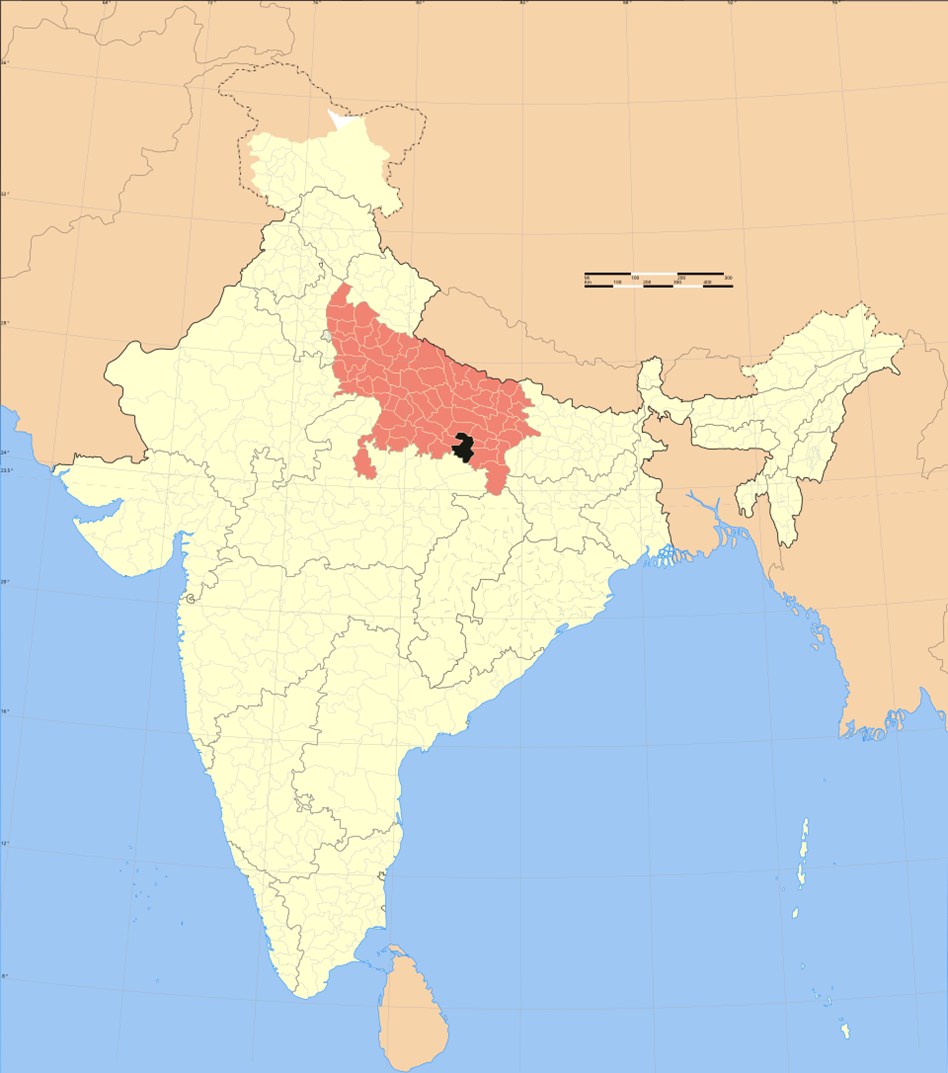
    <heading><span><bold>INTRODUCTION</bold></span></heading><p><span>The word ‘biodiversity’ is a contraction of biological diversity which refers to variety within living world. It includes species, as well as varieties found within same species, and also enormous rage of ecosystem and habitat, forest, grasslands, the ocean and its depths, peat and peat bogs <superscript>[<xref ref-type="link" rid="#ref-1">1</xref>]</superscript>. The species level is generally regarded as most natural one at which to consider whole organism diversity. Therefore, the number of biological types constitutes the degree of diversity. Floral diversity is one of the two components of biodiversity and plays very important role to compose the various habitats <superscript>[<xref ref-type="link" rid="#ref-2">2</xref>]</superscript>. India, a large country, is very rich in floristic diversity. Conserving biodiversity is a difficult undertaking owing to several challenges which the plants also face. The Red Data Book of Indian Plants categorized 602 vascular plants as vulnerable in 1987–1990; by 2003, that number had risen to 1255 and by 2020, it had risen to 2152, indicating the potential threat to the floristic elements of India <superscript>[<xref ref-type="link" rid="#ref-3">3</xref>]</superscript>.</span></p><p><span>Traditional and herbal medicines have widely been used across India especially at semi-urban and rural places <superscript>[<xref ref-type="link" rid="#ref-4">4</xref>]</superscript>. Scientific knowledge of these uses varies with some regions, such as the Eastern Uttar Pradesh state of the northern India, being less well known and reported so far. Some of the plant species which were abundant in Prayagraj district, Uttar Pradesh, India about half a century ago, as per the Uttar Pradesh state Forest Department’s record; have at present become rare or very rare due to over exploitation/urbanization and have fallen in the different categories of threatened species</span><italic><span>. </span></italic><span>Such plant species whose different parts viz. roots, rhizome, bark, seeds etc. are of medicinal importance deserve maximum attention for their protection as indiscriminate exploitation of such species has adversely affected their natural population in the prevailing forests. It has become therefore necessary to prepare a ratified list of higher medicinal plant species which are in immediate danger of extinction and need protection/rehabilitation. On this basis, the present study attempted a survey carried out in Prayagraj District of Uttar Pradesh state, India.</span></p><heading><span><bold>METHODS</bold></span></heading><p><span>The present work is based on the theory that the simplest index of diversity is the total number of species found in a given area. For this survey, the rich vegetative areas of Prayagraj District, Eastern Uttar Pradesh, India were prospected and the data pertaining to the extant medicinal plants were collected with the help of the local inhabitants and authenticated by the competent technical personnel of the state Forest Department of Prayagraj District, Uttar Pradesh, India <xref ref-type="link" rid="#figure-1">[Fig. 1]</xref> during March 2024 to June 2025 <superscript>[<xref ref-type="link" rid="#ref-5">5</xref>]</superscript>. The reliability of the collected information, especially folkloric/ethno-medicinal use was further verified by repeated inquiries to the locally practicing traditional healthcare professionals namely Vaidyas, Hakims and Kavirajs, some important authentic medicinal literatures were also consulted to make the gathered information more appropriate and corroborative <superscript>[<xref ref-type="link" rid="#ref-6">6</xref>, <xref ref-type="link" rid="#ref-7">7</xref>]</superscript>.</span></p><heading><span><bold>RESULTS AND DISCUSSION</bold></span></heading><p><span>On the basis of floristic resources survey carried out in Prayagraj District, Uttar Pradesh, India, by the present authors, 27 numbers of higher medicinal plant species have fallen in the endangered category; which are enumerated in <xref ref-type="link" rid="#table-1">[Table. 1]</xref> with their ethno-medicinal uses prevalent in the region of study <xref ref-type="link" rid="#figure-1">[Fig. 1]</xref>. It is evident from the present study that, Prayagraj, Eastern Uttar Pradesh of northern India has a diverse flora and its play a vital role in the livelihoods of local people including their basic healthcare needs. However, over exploitation of some medicinal floral species such as </span><italic><span>Asparagus racemous, Argyreia speciosa, Ceropegia hirsuta, Chlorophytum arundinaceum, Costus speciosa, Gloriosa superba, Rauvolfia serpentina, Urginea indica </span></italic><span>etc. caused serious damage to the normal population of these </span></p><p><span>species in the study area. The biotic interferences like grazing in forest, filling of wetlands, deforestation, urbanization, etc. have led to the gradual loss of habitat as well as species diversity <superscript>[<xref ref-type="link" rid="#ref-8">8</xref>]</superscript>. On the other hand, modernization of ethnic society and acculturation are threatening the age-old herbal therapy options. It is, therefore, the over-exploited species and the traditional herbal heritage of ethnic societies of the district are called for protection thereof. The findings of the present study are in agreement with those of the other regional flora of India <superscript>[<xref ref-type="link" rid="#ref-9">9</xref>, <xref ref-type="link" rid="#ref-10">10</xref>]</superscript>. Many of the common species are recorded in the zone, including invasive alien species and weeds which are well adapted for a long time to the varied environmental conditions <superscript>[<xref ref-type="link" rid="#ref-11">11</xref>]</superscript>.</span></p><p> </p><figure><graphic src="https://schoproductionportal.s3.ap-south-1.amazonaws.com/1768644739781.png"/><figcaption><span><bold>Fig. 1: Study area- Prayagraj district (highlighter blue-black) in Uttar Pradesh State (highlighted in maroon) of India</bold></span></figcaption></figure><div><span> </span></div><p> </p><figure id="table-1"><table><thead><tr><th><span><bold>Sl. No.</bold></span></th><th><span><bold>Botanical name</bold></span></th><th><span><bold>Family</bold></span></th><th><span><bold>Ethno-medicinal uses</bold></span></th></tr></thead><tbody><tr><td><span>1.</span></td><td><italic><span>Asparagus racemosus </span></italic><span>Wilid.</span></td><td><span>Liliaceae</span></td><td><span><bold>Root:</bold> to promote lactation in women </span><line-break/><span><bold>Shoot:</bold> epilepsy, weakness.</span></td></tr><tr><td><span>2.</span></td><td><italic><span>Abrus precatorius</span></italic><span> Linn.</span></td><td><span>Fabaceae</span></td><td><span><bold>Seed paste:</bold> applied in baldness. </span><line-break/><span><bold>Leaf paste:</bold> swelling, wounds.</span></td></tr><tr><td><span>3.</span></td><td><italic><span>Argyreia speciosa</span></italic><span> Sweet</span></td><td><span>Convolvulaceae</span></td><td><span><bold>Root powder:</bold> leucorrhoea.</span><line-break/><span><bold>Leaf:</bold> wound and swelling.</span></td></tr><tr><td><span>4.</span></td><td><italic><span>Costus speciosus</span></italic><span> Sm.</span></td><td><span>Costaceae</span></td><td><span><bold>Rhizome powder:</bold> cardiac problems, wound, debility.</span></td></tr><tr><td><span>5.</span></td><td><italic><span>Cissampelos peraria </span></italic><span>Linn.</span></td><td><span>Menispermiaceae</span></td><td><span><bold>Root powder:</bold> piles, diarrhea.</span></td></tr><tr><td><span>6.</span></td><td><italic><span>Curcuma aromatica </span></italic><span>Salisb.</span></td><td><span>Zingiberaceae</span></td><td><span><bold>Rhizome paste:</bold> swelling and strike; skin diseases, leprosy, rheumatism.</span></td></tr><tr><td><span>7.</span></td><td><italic><span>Ceropegia hirsuta </span></italic><span>Wt. &amp; Arn.</span></td><td><span>Asclepiadaceae</span></td><td><span><bold>Tuber:</bold> dysentery and diarrhea.</span></td></tr><tr><td><span>8.</span></td><td><italic><span>Cryptolepis buchananii </span></italic><span>Roem.</span></td><td><span>Periplocaeae</span></td><td><span><bold>Root:</bold> fits and faints, hysteria </span><line-break/><span><bold>Latex:</bold> rheumatism</span></td></tr><tr><td><span>9.</span></td><td><italic><span>Chlorophytum arundinaceum</span></italic><span> Baker.</span></td><td><span>Liliaceae</span></td><td><span><bold>Root:</bold> impotency, debility, leucorrhoea.</span></td></tr><tr><td><span>10.</span></td><td><italic><span>Dioscorea bulbifera</span></italic><span> Linn.</span></td><td><span>Dioscoreaceae</span></td><td><span><bold>Tuber paste:</bold> rheumatism, bone problems</span></td></tr><tr><td><span>11.</span></td><td><italic><span>Dioscorea alata</span></italic><span> Linn. </span></td><td><span>Dioscoreaceae</span></td><td><span><bold>Tuber:</bold> blood dysentery, diarrhea.</span></td></tr><tr><td><span>12.</span></td><td><italic><span>Dioscorea esculenta</span></italic><span> Linn.</span></td><td><span>Dioscoreaceae</span></td><td><span><bold>Tuber:</bold> external swelling.</span></td></tr><tr><td><span>13.</span></td><td><italic><span>Dendrophtho falcate </span></italic><span>Etting.</span></td><td><span>Loranthaceae</span></td><td><span><bold>Leaf:</bold> menstrual problems, swelling.</span></td></tr><tr><td><span>14.</span></td><td><italic><span>Gloriosa superba</span></italic><span> Linn.</span></td><td><span>Liliaceae</span></td><td><span><bold>Root:</bold> rheumatoid arthritis, wound, sores.</span></td></tr><tr><td><span>15.</span></td><td><italic><span>Gymnema sylvestre </span></italic><span>Schult.</span></td><td><span>Asclepiadaceae</span></td><td><span><bold>Leaf powder:</bold> diabetes </span><line-break/><span><bold>Leaf paste:</bold> wound and swelling.</span><line-break/><span><bold>Bark:</bold> phlegm</span></td></tr><tr><td><span>16.</span></td><td><italic><span>Hemidesmus indicus</span></italic><span> Linn.</span></td><td><span>Periplocaeae</span></td><td><span><bold>Root:</bold> skin disease, leucorrhoea, wound.</span></td></tr><tr><td><span>17.</span></td><td><italic><span>Helicteres isora</span></italic><span> Linn.</span></td><td><span>Sterculiaceae</span></td><td><span><bold>Fruit:</bold> colitis, diarrhea </span><line-break/><span><bold>Seed:</bold> otorrhoea</span></td></tr><tr><td><span>18.</span></td><td><italic><span>Ichnocarpus isora</span></italic><span> Linn.</span></td><td><span>Apocynaceae</span></td><td><span><bold>Leaf decoction:</bold> fever. </span><line-break/><span><bold>Root:</bold> anti-dysenteric, hypoglycemic</span></td></tr><tr><td><span>19.</span></td><td><italic><span>Muccuna pruriens</span></italic><span> Linn.</span></td><td><span>Papilionaceae</span></td><td><span><bold>Root:</bold> flatulence, cystitis.</span></td></tr><tr><td><span>20.</span></td><td><italic><span>Oroxylum indicum</span></italic><span> Vent.</span></td><td><span>Bignoniaceae</span></td><td><span><bold>Seed:</bold> earache, ear swelling </span><line-break/><span><bold>Bark:</bold> acute rheumatism </span><line-break/><span><bold>Leaf decoction:</bold> digestive disorders</span><line-break/><span><bold>Root decoction:</bold> dropsy</span></td></tr><tr><td><span>21.</span></td><td><italic><span>Rivea hypocrateriformis </span></italic><span>Choisy.</span></td><td><span>Convolvulaceae</span></td><td><span><bold>Plant juice:</bold> plies </span><line-break/><span><bold>Plant paste:</bold> wound and scorpion sting.</span></td></tr><tr><td><span>22.</span></td><td><italic><span>Rauvolfia serpentina </span></italic><span>Benth.</span></td><td><span>Apocynaceae</span></td><td><span><bold>Root:</bold> high blood pressure, hysteria, insomnia</span></td></tr><tr><td><span>23.</span></td><td><italic><span>Rauvolfia tetraphylla</span></italic><span> Linn.</span></td><td><span>Apocynaceae</span></td><td><span><bold>Root:</bold> high blood pressure, insanity.</span></td></tr><tr><td><span>24.</span></td><td><italic><span>Urginea indica </span></italic><span>Kunth.</span></td><td><span>Liliaceae</span></td><td><span><bold>Bulb:</bold> piles, pain, chronic cough.</span></td></tr><tr><td><span>25.</span></td><td><italic><span>Vitex negundo</span></italic><span> Linn.</span></td><td><span>Verbenaceae</span></td><td><span><bold>Leaf paste:</bold> swelling, rheumatism </span><line-break/><span><bold>Leaf smoke:</bold> headache </span><line-break/><span><bold>Leaf decoction: </bold>malarial fever.</span></td></tr><tr><td><span>26.</span></td><td><italic><span>Withania somnifera </span></italic><span>Dunal.</span></td><td><span>Solanaceae</span></td><td><span><bold>Root:</bold> body pain, wound, cough, menstrual trouble</span></td></tr><tr><td><span>27.</span></td><td><italic><span>Zingiber zerumbet</span></italic><span> Smith.</span></td><td><span>Zingiberaceae</span></td><td><span><bold>Rhizome:</bold> cough, warm, leprosy, pimples</span></td></tr></tbody></table><figcaption><span><bold>Table 1: Threatened medicinal floristic elements of Prayagraj district, Eastern Uttar Pradesh, India</bold></span></figcaption></figure><p> </p><heading><bold>CONCLUSION</bold></heading><p><span>Biodiversity is a short term commonly used to describe the number, variety, and variability of living organisms.  In the present investigation, the authors have identified and reported 27 medicinally important floral species (with folkloric medicinal usage thereof) which are at the different </span><line-break/><line-break/><line-break/><span>levels of threats due to over exploitation/over harvesting for various purposes by the local people as well as by the industrialization/urbanization. This information with ethnomedicinal knowledge thus collated may serve as primary reference material for future researchers/chroniclers. As a result, they are on the verge of extinction, if adequate steps are not taken to protect them very soon, these species would disappear from this area together with their medicinal usage obviously in due course of time <superscript>[<xref ref-type="link" rid="#ref-12">12</xref>]</superscript>. The flora are important components of any ecosystem and influencing up to large extant to each other with a direct impact on the habitats and inhabitants including their dietary and basic healthcare needs leading to their later possible exploitation in contemporary medicine <superscript>[<xref ref-type="link" rid="#ref-13">13</xref>]</superscript>. Hence, the floral diversity depletion is a major cause of the biodiversity depletion in this area too. If these are not conserved/rehabilitated, the future world would find only the edible crop plants. </span></p><heading><span><bold>ACKNOWLEDGEMENT</bold></span></heading><p><span>The authors are grateful to the local people and traditional healers of Prayagraj district, Uttar Pradesh, India and staff of the state Forest Department, Uttar Pradesh for sparing their time and assistance in surveying and collecting the specimens during the courses of this investigation. The authors are also thankful to the National Medicinal Plants Board, Ministry of AYUSH,</span><italic><span> </span></italic><span>New Delhi, Govt. of India, for providing technical supports. </span></p><heading><span><bold>Funding</bold></span></heading><p><span>None. </span></p><heading><span><bold>Conflict of interest</bold></span></heading><p><span>The authors declare no conflicts of interest. </span></p>
  </body>
  <back>
    <ref-list>
      <title>References</title>


          <ref id="ref-3">
            <element-citation publication-type="journal">
              
                <person-group person-group-type="author">
                  <name>
                    Gowthami R, Sharma N, Pandey R, Agrawal A
                  </name>
                </person-group>
              
              
                <article-title>Status and consolidated list of threatened medicinal plants of India</article-title>
              
              
                <source>Genetic Resources and Crop Evolution</source>
              
              
                <year>2021</year>
              
              
                <volume>68</volume>
              
              
                <issue>6</issue>
              
              
                <uri>https://doi.org/10.1007/s10722-021-01199-0</uri>
              
            </element-citation>
          </ref>


          <ref id="ref-4">
            <element-citation publication-type="journal">
              
                <person-group person-group-type="author">
                  <name>
                    Adhikari PP, Paul SB
                  </name>
                </person-group>
              
              
                <article-title>History of Indian traditional medicine: a medical inheritance</article-title>
              
              
                <source>Asian Journal of Pharmaceutical and Clinical Research</source>
              
              
                <year>2018</year>
              
              
                <volume>11</volume>
              
              
                <issue>1</issue>
              
              
                <uri>https://doi.org/10.22159/ajpcr.2018.v11i1.21893</uri>
              
            </element-citation>
          </ref>


          <ref id="ref-10">
            <element-citation publication-type="journal">
              
                <person-group person-group-type="author">
                  <name>
                    Bhattacharya, S
                  </name>
                </person-group>
              
              
                <article-title>Cultivation of Essential Oils</article-title>
              
              
                <source>Essential Oils in Food Preservation, Flavor and Safety</source>
              
              
                <year>2016</year>
              
              
                <volume>1st Ed</volume>


                <uri>https://doi.org/10.1016/b978-0-12-416641-7.00003-1</uri>
              
            </element-citation>
          </ref>


          <ref id="ref-12">
            <element-citation publication-type="journal">
              
                <person-group person-group-type="author">
                  <name>
                    Bhattacharya S
                  </name>
                </person-group>
              
              
                <article-title>Antineoplastic potential of &lt;I&gt;Trichosanthes dioica&lt;/I&gt; Root: A treatise</article-title>
              
              
                <source>Indian Journal of Natural Products and Resources</source>
              
              
                <year>2023</year>
              
              
                <volume>14</volume>
              
              
                <issue>2</issue>
              
              
                <uri>https://doi.org/10.56042/ijnpr.v14i2.1161</uri>
              
            </element-citation>
          </ref>


          <ref id="ref-13">
            <element-citation publication-type="journal">
              
                <person-group person-group-type="author">
                  <name>
                    Roy MB, Bhattacharya S, Debnath M, Ghosh N
                  </name>
                </person-group>
              
              
                <article-title>Development and Standardization of a New Ayurvedic Formulation from &lt;I&gt;Barringtonia acutangula&lt;/I&gt; leaf</article-title>
              
              
                <source>Current Trends in Biotechnology and Pharmacy</source>
              
              
                <year>2025</year>
              
              
                <volume>19</volume>
              
              
                <issue>4</issue>
              
              
                <uri>https://doi.org/10.5530/ctbp.2025.4.46</uri>
              
            </element-citation>
          </ref>
        
      
    </ref-list>
  </back>
</article>