<?xml version='1.0' encoding='UTF-8'?>

<!DOCTYPE article PUBLIC "-//NLM//DTD JATS (Z39.96) Journal Publishing DTD v1.1d1 20130915//EN" "JATS-journalpublishing1.dtd">
<article xmlns:xlink="http://www.w3.org/1999/xlink">
  <front>
    <journal-meta id="journal-meta-87cddb9ab7774ac9973b6a64b7cbc767">
      <journal-id journal-id-type="nlm-ta">Sciresol</journal-id>
      <journal-id journal-id-type="publisher-id">Sciresol</journal-id>
      <journal-id journal-id-type="journal_submission_guidelines">https://jmsh.ac.in/</journal-id>
      <journal-title-group>
        <journal-title>Journal of Medical Sciences and Health</journal-title>
      </journal-title-group>
      <issn publication-format="print"/>
    </journal-meta>
    <article-meta>
        
          
            <article-id pub-id-type="doi">10.18579/jopcr/v25.i1.159</article-id>
          
          
            <article-categories>
              <subj-group>
                <subject>REVIEW ARTICLE</subject>
              </subj-group>
            </article-categories>
            <title-group>
              <article-title>&lt;p&gt;&lt;em&gt;Zingiber offcinale&lt;/em&gt;: A Natural Remedy with Multifaceted Pharmacological&amp;nbsp; Actions&lt;/p&gt;</article-title>
            </title-group>
          
          
            <pub-date date-type="pub">
              <day>30</day>
              <month>3</month>
              <year>2026</year>
            </pub-date>
            <permissions>
              <copyright-year>2026</copyright-year>
            </permissions>
          
          
            <volume>25</volume>
          
          
            <issue>1</issue>
          
          <fpage>1</fpage>

          <abstract>
            <title>Abstract</title>
            &lt;p&gt;&lt;emphasis&gt;Zingiber offcinale &lt;/emphasis&gt;(&lt;emphasis&gt;Zingiber officinale&lt;/emphasis&gt; Roscoe), a perennial herbaceous plant from the Zingiberaceae family, has been utilized for centuries in traditional medicine systems worldwide, including Ayurveda, Traditional Chinese Medicine, and Unani-Tibb. This review comprehensively examines the pharmacological potential of &lt;emphasis&gt;Zingiber offcinale&lt;/emphasis&gt;, focusing on its phytochemical composition and diverse therapeutic actions. A systematic literature analysis was conducted to investigate key bioactive compounds—&lt;emphasis&gt;Zingiber offcinale &lt;/emphasis&gt;ols, shogaols, paradols, and zingerone—and their roles in various therapeutic pathways using preclinical and clinical evidence. &lt;emphasis&gt;Zingiber offcinale &lt;/emphasis&gt;demonstrates remarkable pharmacological activities through multiple mechanisms. The major constituents, particularly 6-&lt;emphasis&gt;Zingiber offcinale &lt;/emphasis&gt;ol and 6-shogaol, exhibit significant anticancer properties by inhibiting angiogenesis, inducing apoptosis, and suppressing inflammatory pathways (COX-2, NF-κB) in colon, ovarian, lung, and breast cancers. Anti-inflammatory effects are mediated through COX-1, COX-2, and 5-LOX enzyme inhibition, along with cytokine modulation (TNF-α, IL-1β, IL-6). Potent antioxidant activity involves free radical scavenging, lipid peroxidation inhibition, and Nrf2 signalling activation. In metabolic disorders, &lt;emphasis&gt;Zingiber offcinale &lt;/emphasis&gt;enhances insulin sensitivity, inhibits carbohydrate-digesting enzymes (α-glucosidase, α-amylase), and protects pancreatic β-cells. Cardiovascular benefits include blood pressure reduction via ACE inhibition, lipid profile improvement, and endothelial function enhancement. &lt;emphasis&gt;Zingiber officinale&lt;/emphasis&gt; represents a promising natural therapeutic agent with a well-established safety profile (GRAS status). Its synergistic bioactive compounds offer potential applications in cancer prevention, the management of inflammatory diseases, the treatment of metabolic syndrome treatment, and cardiovascular protection. However, well-designed clinical trials are essential to establish standardized dosing protocols and optimize bioavailability, underscoring &lt;emphasis&gt;Zingiber offcinale &lt;/emphasis&gt;&#x27;s promise as a functional food and nutraceutical in contemporary healthcare.&lt;/p&gt;
          </abstract>
          
          
            <kwd-group>
              <title>Keywords</title>
              
                <kwd>Zingiber officinale</kwd>
              
                <kwd>Zingiber offcinale</kwd>
              
                <kwd>Zingiber offcinale ol</kwd>
              
                <kwd>Shogaol</kwd>
              
                <kwd>Anti-inflammatory</kwd>
              
                <kwd>Antioxidant</kwd>
              
                <kwd>Anticancer</kwd>
              
                <kwd>Antidiabetic</kwd>
              
                <kwd>Cardiovascular protection</kwd>
              
                <kwd>Phytotherapy</kwd>
              
            </kwd-group>


        <contrib-group>
          
            
              <contrib contrib-type="author">
                <name>
                  <surname>Mahajan</surname>
                  <given-names>Tushar D</given-names>
                </name>
                
                  <xref rid="aff-1" ref-type="aff">1</xref>
                
              </contrib>


              <aff id="aff-1">
                <institution> Department of Pharmacology M.A.B.D. Institute of Pharmaceutical Education and Research </institution>
                <addr-line>Babhulgoan, Yeola, Nashik, Maharashtra India</addr-line>
              </aff>


              <contrib contrib-type="author">
                <name>
                  <surname>More</surname>
                  <given-names>Yogesh B</given-names>
                </name>
                
                  <xref rid="aff-1" ref-type="aff">1</xref>
                
              </contrib>


              <aff id="aff-1">
                <institution> Department of Pharmacology M.A.B.D. Institute of Pharmaceutical Education and Research </institution>
                <addr-line>Babhulgoan, Yeola, Nashik, Maharashtra India</addr-line>
              </aff>


              <contrib contrib-type="author">
                <name>
                  <surname>Dhanwate</surname>
                  <given-names>Vaibhav S</given-names>
                </name>
                
                  <xref rid="aff-1" ref-type="aff">1</xref>
                
              </contrib>


              <aff id="aff-1">
                <institution> Department of Pharmacology M.A.B.D. Institute of Pharmaceutical Education and Research </institution>
                <addr-line>Babhulgoan, Yeola, Nashik, Maharashtra India</addr-line>
              </aff>


              <contrib contrib-type="author">
                <name>
                  <surname>Deore</surname>
                  <given-names>Aarti S</given-names>
                </name>
                
                  <xref rid="aff-1" ref-type="aff">1</xref>
                
              </contrib>


              <aff id="aff-1">
                <institution> Department of Pharmacology M.A.B.D. Institute of Pharmaceutical Education and Research </institution>
                <addr-line>Babhulgoan, Yeola, Nashik, Maharashtra India</addr-line>
              </aff>


              <contrib contrib-type="author">
                <name>
                  <surname>Kharote</surname>
                  <given-names>Shruti A</given-names>
                </name>
                
                  <xref rid="aff-1" ref-type="aff">1</xref>
                
              </contrib>


              <aff id="aff-1">
                <institution> Department of Pharmacology M.A.B.D. Institute of Pharmaceutical Education and Research </institution>
                <addr-line>Babhulgoan, Yeola, Nashik, Maharashtra India</addr-line>
              </aff>


              <contrib contrib-type="author">
                <name>
                  <surname>Darade</surname>
                  <given-names>Priyanka N</given-names>
                </name>
                
                  <xref rid="aff-1" ref-type="aff">1</xref>
                
              </contrib>


              <aff id="aff-1">
                <institution> Department of Pharmacology M.A.B.D. Institute of Pharmaceutical Education and Research </institution>
                <addr-line>Babhulgoan, Yeola, Nashik, Maharashtra India</addr-line>
              </aff>


              <contrib contrib-type="author">
                <name>
                  <surname>Kashid</surname>
                  <given-names>Vivekanand A</given-names>
                </name>
                
                  <xref rid="aff-1" ref-type="aff">1</xref>
                
              </contrib>


              <aff id="aff-1">
                <institution> Department of Pharmacology M.A.B.D. Institute of Pharmaceutical Education and Research </institution>
                <addr-line>Babhulgoan, Yeola, Nashik, Maharashtra India</addr-line>
              </aff>
            
          
        </contrib-group>
        
    </article-meta>
  </front>
  <body>
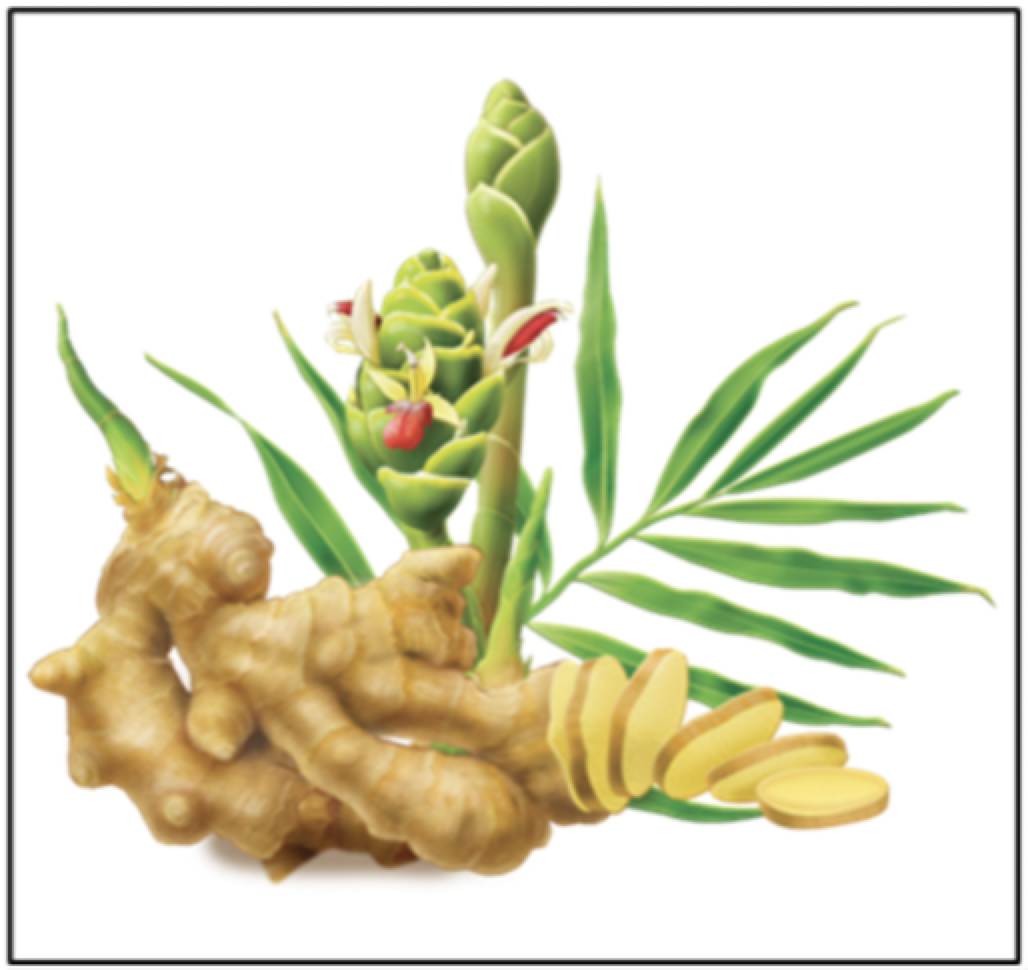
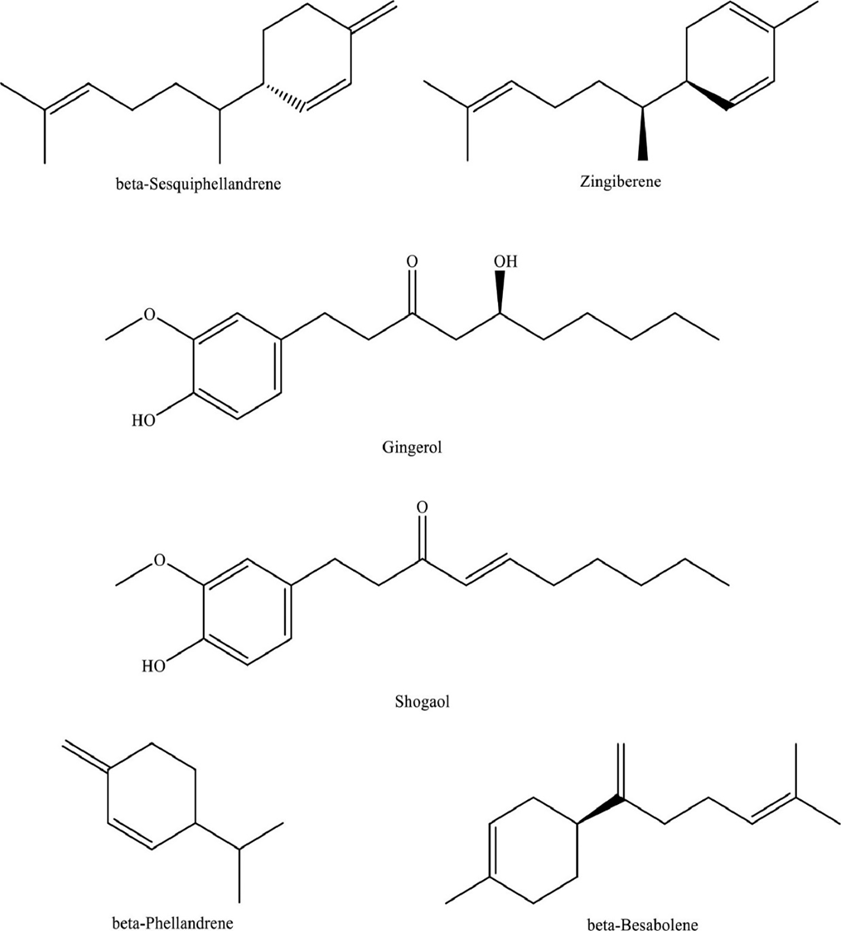
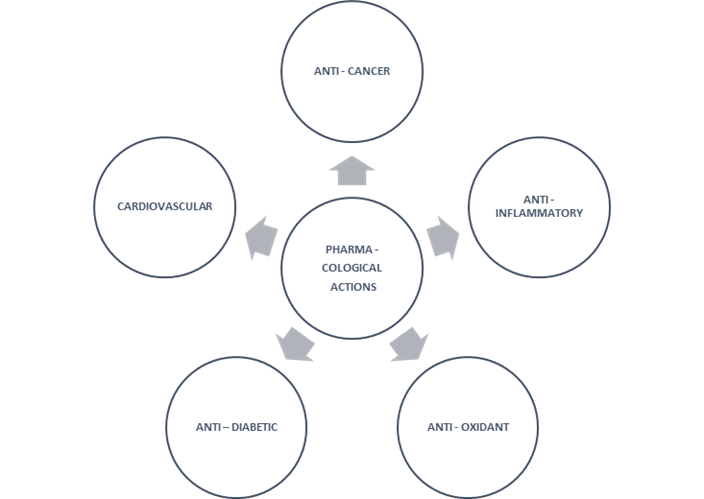
    <heading> </heading><heading><span><bold>INTRODUCTION</bold></span></heading><p><italic><span>Zingiber offcinale </span></italic><span>(</span><italic><span>Zingiber offcinale Roscoe</span></italic><span>) is a globally significant spice and medicinal plant, renowned for its distinctive flavor and therapeutic properties. Economically, </span><italic><span>Zingiber offcinale </span></italic><span>holds substantial value, contributing to the agricultural and pharmaceutical sectors<superscript>[<xref ref-type="link" rid="#ref-1">1</xref>]</superscript>. </span><italic><span>Zingiber offcinale</span></italic><span> is known as </span><italic><span>Zingiber offcinale</span></italic><span>, gingiber, and singapura in Old English, Greek, Mediaeval Latin. The plant is known as Sringavera in Sanskrit. The Latin term Zingiber, which means "shaped like a horn" and alludes to the roots that resemble the antlers of a deer, is taken from the Greek zingiberis, which is derived from the Sanskrit name of the spice, singabera<superscript>[<xref ref-type="link" rid="#ref-2">2</xref>]</superscript>. Perennial </span><italic><span>Zingiber offcinale </span></italic><span>bloomsnially. Thin leaf blades on 100 cm pseudostems are characteristic of </span><italic><span>Zingiber offcinale</span></italic><span> (</span><italic><span>Zingiber offcinale</span></italic><span> </span><italic><span>L</span></italic><span>.). The petals of </span><italic><span>Zingiber offcinale </span></italic><span>flowers are yellow with a purple border. The primary </span><italic><span>Zingiber offcinale </span></italic><span>s are bitter, red, and white, and rhizomes provide single stems. There are more than 100 chemicals in </span><italic><span>Zingiber offcinale</span></italic><span>. </span><italic><span>Zingiber offcinale </span></italic><span>gets its strong flavor from lipids or glycolipids (9%) and oleoresin (5–8%). </span><italic><span>Zingiber offcinale </span></italic><span>contains unpleasant compounds and 1–3% volatile oils. Constipation, ulcers, rheumatism, arthritis, atheroclerosis, diabetes, high blood pressure, nausea, and cancer can all be cured by </span><italic><span>Zingiber offcinale</span></italic><span>. Antioxidative and inflammatory qualities slow down the aging process. The compounds </span><italic><span>Zingiber offcinale </span></italic><span>ols, shogaols, paradols, and zingerone give </span><italic><span>Zingiber offcinale </span></italic><span>its strong flavor. </span><italic><span>Zingiber offcinale </span></italic><span>ol, shogaols, paradols, and zinger one all share functional pharmacological traits, such as anti-inflammatory, antioxidant, and anti-tumor effects. Due to their similar effects on energy metabolism and glucose absorption, they may be useful in the prevention and treatment of both diabetes and obesity<superscript>[<xref ref-type="link" rid="#ref-3">3</xref>]</superscript>.</span></p><p><span>Their popularity has increased recently due to the perception that they are less harmful and provide efficient substitutes for synthetic drugs. Herbs and spices have long been used by humans to preserve food, enhance cooking, and advance health<superscript>[<xref ref-type="link" rid="#ref-4">4</xref>]</superscript>. For generations, </span><italic><span>Zingiber offcinale</span></italic><span> has been a key component of Ayurvedic, Unani-Tibb, and Traditional Chinese medicine herbal remedies used to cure various illnesses. Since ancient times, </span><italic><span>Zingiber offcinale </span></italic><span>has been utilized as a medicinal and herbal remedy as well as a significant culinary spice all over the world. South-east Asian traditional medicine, Greco-Roman customs, Brazil, Australia, Africa, China, India, Bangladesh, Taiwan, Jamaica, Mexico, and Japan all employ this plant. The rhizomes are also grown for medical purposes throughout the Middle East and some regions of the United States. According to reports, </span><italic><span>Zingiber offcinale </span></italic><span>rhizome is frequently used as a condiment or spice. One of the first eastern spices cultivated by Europeans was zingiber offcinale, which was brought to northern Europe by the Romans after they acquired it from Arab traders. During the Middle Ages, it was one of the most widely used spices. In the sixteenth century, the Portuguese brought it to West Africa and other tropical regions. The spice's therapeutic qualities were recognized in Germany and France in the ninth century, and in England in the tenth.</span></p><p><span>Elzebroek and Wind discovered that Marco Polo brought some </span><italic><span>Zingiber offcinale </span></italic><span>to Europe after being introduced to it on a trip to Sumatra and China in the thirteenth century. They have also talked about how Francesco de Mendoza, a Spaniard, started the cultivation of </span><italic><span>Zingiber offcinale </span></italic><span>in Mexico. The earliest Chinese herbal book, She Nung Ben Cao Jing, credited to Emperor Shen Nung (c. 2000 BC), mentions dried </span><italic><span>Zingiber offcinale</span></italic><span>, or Gan-jiang<superscript>[<xref ref-type="link" rid="#ref-2">2</xref>]</superscript>.</span></p><p><span>This review aims to critically explore the pharmacological potential of </span><italic><span>Zingiber offcinale </span></italic><span>(</span><italic><span>Zingiber offcinale</span></italic><span>) as a natural remedy. It focuses on its phytochemical composition and a wide range of therapeutic actions, including anti-inflammatory, antioxidant, antimicrobial, antidiabetic, and anticancer effects.</span></p><heading><span><bold>Taxonomical Position</bold></span></heading><p><span>Kingdom: Plantae </span></p><p><span>Division: Magnoliophytes </span></p><p><span>Class: Liliopsida</span></p><p><span>Order: Zingiberales</span></p><p><span>Family: Zingiberaceae</span></p><p><span>Genus: Zingiber</span></p><p><span>Species: </span><italic><span>Zingiber offcinale</span></italic><span> var. Roscoe<superscript>[<xref ref-type="link" rid="#ref-5">5</xref>]</superscript>.</span></p><figure><graphic src="https://schoproductionportal.s3.ap-south-1.amazonaws.com/data/JOPCR/128/1771834196752.png"/><figcaption><span><bold>Fig. 1: </bold></span><italic><span><bold>Zingiber offcinale </bold></span></italic><span><bold>(</bold></span><italic><span><bold>Zingiber offcinale Roscoe</bold></span></italic><span><bold>)</bold></span></figcaption></figure><p> </p><p><span><bold>1. Anticancer:</bold></span></p><p><italic><span>Zingiber offcinale</span></italic><span>, a natural antioxidant and anticarcinogenic dietary component, is rich in active components with significant potential for cancer prevention and therapy.</span></p><p><span>Important Results Regarding the Anticancer Activity of </span><italic><span>Zingiber offcinale </span></italic><span>: </span></p><list><list-item><p><span><bold>Active Components:</bold> 6-</span><italic><span>Zingiber offcinale </span></italic><span>ol, 6-shogaol, and β-element are the main active components found in </span><italic><span>Zingiber offcinale.</span></italic></p></list-item><list-item><p><span><bold>Mechanism of Action:</bold> The chemicals in </span><italic><span>Zingiber offcinale </span></italic><span>work in a variety of ways, such as:</span></p><p><span><bold>a) Anti-angiogenesis:</bold> 6-</span><italic><span>Zingiber offcinale </span></italic><span>ol is a strong anti-angiogenic drug that can stop tumor development and spread by preventing the production of new blood vessels. </span></p></list-item></list><p> </p><p> </p><figure><graphic src="https://schoproductionportal.s3.ap-south-1.amazonaws.com/data/JOPCR/128/1769583301714.png"/><figcaption><span><bold>Fig. 2: Phytoconstituents present in </bold></span><italic><span><bold>Z. officinale</bold></span></italic></figcaption></figure><p> </p><heading><span><bold>PHARMACOLOGICAL ACTIONS</bold></span></heading><p> </p><figure><graphic src="https://schoproductionportal.s3.ap-south-1.amazonaws.com/data/JOPCR/128/1769583033115.png"/><figcaption><span><bold>Fig. 1: Pharmacological Actions of </bold></span><italic><span><bold>Zingiber Offcinale</bold></span></italic></figcaption></figure><p> </p><list><list-item><p><span><bold>b) Inhibition of Inflammatory Pathways:</bold> Substances such as 6-</span><italic><span>Zingiber offcinale </span></italic><span>ol and 6-shogaol reduce the activity of NF-αβ (necrosis factor kappa B) signaling pathways and suppress the production of COX-2 (cyclooxygenase-2)<superscript>[<xref ref-type="link" rid="#ref-6">6</xref>]</superscript></span></p><p><span><bold>c) Apoptosis Induction (Programmed Cell Death):</bold> Substances such as β-element and Zerumbone cause cancer cells (such as non-small-cell lung cancer and colon cancer) to undergo apoptosis, which is frequently mediated by mitochondrial pathways (cytochrome c release, caspase activation).</span></p><p><span><bold>d) Antioxidant Effects:</bold> </span><italic><span>Zingiber offcinale </span></italic><span> is a naturally occurring antioxidant that lowers lipid peroxidation and inhibits the development of liver cancer. Additionally, it increases the activity of glutathione reductase and other antioxidant enzymes<superscript>[<xref ref-type="link" rid="#ref-7">7</xref>]</superscript>.</span></p><p><span><bold>e) Modulation of Growth Factors:</bold> In ovarian cancer cells, </span><italic><span>Zingiber offcinale </span></italic><span> components inhibit NF-αβ activation and reduce the secretion of angiogenic factors such as IL-8 and VEGF (vascular endothelial growth factor)<superscript>[<xref ref-type="link" rid="#ref-7">7</xref>]</superscript>.</span></p></list-item><list-item><p><span><bold>Specific Cancer Targets</bold></span></p></list-item></list><figure id="table-1"><table><thead><tr><th><span><bold>Cancer Type</bold></span></th><th><span><bold>Active Compounds</bold></span></th><th><span><bold>Mechanism / Effect</bold></span></th></tr></thead><tbody><tr><td><span>Colon cancer</span></td><td><span>6-</span><italic><span>Zingiber offcinale </span></italic><span>ol, Zerumbone</span></td><td><span>COX-1 inhibition, apoptosis induction</span></td></tr><tr><td><span>Ovarian cancer</span></td><td><span>6-</span><italic><span>Zingiber offcinale </span></italic><span>ol, 6-shogaol</span></td><td><span>↓ NF-κB, ↓ VEGF, ↓ IL-8</span></td></tr><tr><td><span>Lung cancer</span></td><td><span>β-Element, 6-shogaol</span></td><td><span>Mitochondrial apoptosis</span></td></tr><tr><td><span>Breast cancer</span></td><td><span>6-shogaol</span></td><td><span>Anti-metastatic activity</span></td></tr><tr><td><span>Liver cancer</span></td><td><italic><span>Zingiber offcinale </span></italic><span> extract</span></td><td><span>↓ TNF-α, ↓ NF-κB, antioxidant protection</span></td></tr><tr><td><span>Skin cancer</span></td><td><span>6-</span><italic><span>Zingiber offcinale </span></italic><span>ol, 6-Paradol</span></td><td><span>Inhibits COX-2 and NF-κB</span></td></tr><tr><td><span>Gastric cancer</span></td><td><span>6-</span><italic><span>Zingiber offcinale </span></italic><span>ol, Zerumbone</span></td><td><span>Inhibits proliferation and NF-κB</span></td></tr><tr><td><span>Endometrial cancer</span></td><td><span>Terpenoids</span></td><td><span>Activates p53-mediated apoptosis</span></td></tr></tbody></table><figcaption><span><bold>Table 1: Cancer Targets<superscript>[<xref ref-type="link" rid="#ref-6">6</xref>]</superscript></bold></span></figcaption></figure><p> </p><p><span>Especially active against tumor growth are the chemicals 6-, 8-, and 10-shogaols; 6-shogaol often shows more potential than 6-</span><italic><span>Zingiber offcinale </span></italic><span>ol. All these results suggest that </span><italic><span>Zingiber offcinale </span></italic><span> extract could represent a new tool in cancer maintenance and prevention.</span></p><p><span><bold>2. Anti – Inflammtory:</bold></span></p><p><span>The potent anti-inflammatory qualities of </span><italic><span>Zingiber offcinale </span></italic><span>(</span><italic><span>Zingiber officinale</span></italic><span>) are widely recognized. Numerous preclinical and clinical investigations support this. </span><italic><span>Zingiber offcinale </span></italic><span>ols, shogaols, and zingerone—its primary bioactive components—have an impact on a number of inflammatory molecular and cellular pathways.</span></p><list><list-item><p><span><bold>Mechanisms of Action:</bold></span></p></list-item></list><p><italic><span>Zingiber offcinale </span></italic><span> has stuff in it that can help reduce swelling. It does this in a few ways, like changing how some proteins in your body behave, blocking certain enzymes, and managing the signals that cells send to each other<superscript>[<xref ref-type="link" rid="#ref-8">8</xref>]</superscript>.</span></p><figure id="table-2"><table><thead><tr><th><span><bold>Mechanism</bold></span></th><th><span><bold>Molecular Target/Pathway</bold></span></th><th><span><bold>Effect</bold></span></th><th><span><bold>Outcome</bold></span></th></tr></thead><tbody><tr><td><span>Enzyme Inhibition</span></td><td><span>COX-1, COX-2, 5-LOX</span></td><td><span>Inhibits prostaglandin and leukotriene synthesis</span></td><td><span>↓ inflammation and pain</span></td></tr><tr><td><span>Cytokine Modulation</span></td><td><span>TNF-α, IL-1β, IL-6, chemokines</span></td><td><span>Downregulates pro-inflammatory cytokine production</span></td><td><span>Suppresses immune cell activation (T-cells, macrophages)</span></td></tr><tr><td><span>Signal Transduction Regulation</span></td><td><span>NF-κB, MAPK, PI3K/Akt</span></td><td><span>Inhibits transcription of inflammatory genes</span></td><td><span>↓  oxidative stress and inflammation</span></td></tr></tbody></table><figcaption><span><bold>Table 2: Mechanisms of Anti-Inflammatory Action of </bold></span><italic><span><bold>Zingiber offcinale</bold></span></italic><span><bold><superscript>[<xref ref-type="link" rid="#ref-8">8</xref>, <xref ref-type="link" rid="#ref-9">9</xref>, <xref ref-type="link" rid="#ref-10">10</xref>]</superscript></bold></span></figcaption></figure><list><list-item><p><span><bold>Safety Profile:</bold></span></p></list-item></list><p><span>The safety and tolerability profile of </span><italic><span>Zingiber offcinale </span></italic><span>is considered satisfactory. According to several in vivo and clinical investigations, </span><italic><span>Zingiber offcinale </span></italic><span>supplements are well tolerated and have few side effects. Due to its anticoagulant tendency, however, people prescribed antiplatelet or anticoagulant medication are advised to exercise caution<superscript>[<xref ref-type="link" rid="#ref-11">11</xref>, <xref ref-type="link" rid="#ref-12">12</xref>]</superscript>.</span></p><figure id="table-3"><table><thead><tr><th><span><bold>Parameter</bold></span></th><th><span><bold>Observation</bold></span></th><th><span><bold>Clinical Evidence</bold></span></th><th><span><bold>Notes</bold></span></th></tr></thead><tbody><tr><td><span>General safety</span></td><td><span>Generally recognized as safe (GRAS)</span></td><td><span>Clinical and toxicological studies support safety</span></td><td><span>FDA-approved food ingredient</span></td></tr><tr><td><span>Adverse effects</span></td><td><span>Mild gastrointestinal symptoms (rare)</span></td><td><span>Reported in high-dose supplements</span></td><td><span>Self-limiting</span></td></tr><tr><td><span>Drug interactions</span></td><td><span>Potential anticoagulant effects</span></td><td><span>Interaction with warfarin, aspirin</span></td><td><span>Use with caution in such cases</span></td></tr></tbody></table><figcaption><span><bold>Table 3: Safety and Toxicological Summary of </bold></span><italic><span><bold>Zingiber offcinale</bold></span></italic><span><superscript>[<xref ref-type="link" rid="#ref-11">11</xref>, <xref ref-type="link" rid="#ref-12">12</xref>]</superscript></span></figcaption></figure><p> </p><p><span><bold>3. Antioxidant:</bold></span></p><list><list-item><p><span><bold>Mechanisms of Action</bold></span></p></list-item></list><p><span>a) Free Radical Scavenging: Because of the high level of phenolics present, extracts of </span><italic><span>Zingiber offcinale </span></italic><span>have effective scavenging characteristics against free radicals. By transferring electrons, 6-</span><italic><span>Zingiber offcinale </span></italic><span>ol and 6-shogaol scavenge reactive oxygen species (ROS), preventing oxidative stress and cellular damage<superscript>[<xref ref-type="link" rid="#ref-13">13</xref>]</superscript>.</span></p><p><span>b) Inhibition of Lipid Peroxidation: The phenolic chemicals present in </span><italic><span>Zingiber offcinale </span></italic><span> inhibit the process of lipid peroxidation, which prevents oxidative damage to cell membranes. This activity adds to its preventive effect against inflammatory and cardiovascular disorders<superscript>[<xref ref-type="link" rid="#ref-14">14</xref>]</superscript>.</span></p><p><span>c) Modulation of Gene Expression: </span><italic><span>Zingiber offcinale</span></italic><span> enhances the expression of antioxidant enzymes, such as glutathione peroxidase and superoxide dismutase, by modulating the signaling pathways like Nrf2. Besides, it also aids in cancer chemoprevention through the regulation of survival and apoptosis-promoting genes<superscript>[<xref ref-type="link" rid="#ref-15">15</xref>]</superscript>.</span></p><figure id="table-4"><table><thead><tr><th><span><bold>Mechanism</bold></span></th><th><span><bold>Key Compounds</bold></span></th><th><span><bold>Biological Effect</bold></span></th><th><span><bold>Relevant Pathways/Targets</bold></span></th></tr></thead><tbody><tr><td><span>Free Radical Scavenging</span></td><td><span>6-</span><italic><span>Zingiber offcinale </span></italic><span>ol, 6-Shogaol</span></td><td><span>Neutralizes ROS, reduces oxidative stress</span></td><td><span>Electron donation, ROS scavenging</span></td></tr><tr><td><span>Inhibition of Lipid Peroxidation</span></td><td><italic><span>Zingiber offcinale </span></italic><span>ols, Paradols</span></td><td><span>Protects cell membranes from oxidation</span></td><td><span>Lipid radical chain inhibition</span></td></tr><tr><td><span>Gene Expression Modulation</span></td><td><italic><span>Zingiber offcinale </span></italic><span>ol, Zingerone</span></td><td><span>Upregulates antioxidant enzymes</span></td><td><span>Nrf2/ARE signaling</span></td></tr><tr><td><span>Anti-inflammatory Action</span></td><td><span>Shogaols, Zingerone</span></td><td><span>↓  oxidative inflammation</span></td><td><span>NF-κB, COX-2 inhibition</span></td></tr></tbody></table><figcaption><span><bold>Table 4: Summary of </bold></span><italic><span><bold>Zingiber offcinale </bold></span></italic><span><bold>’s Antioxidant Mechanisms and Biological Effects<superscript>[<xref ref-type="link" rid="#ref-13">13</xref>-<xref ref-type="link" rid="#ref-15">15</xref>]</superscript></bold></span></figcaption></figure><list><list-item><p><span><bold>Safety Profile</bold></span></p></list-item></list><p><span>According to the U.S. FDA, </span><italic><span>Zingiber offcinale </span></italic><span>is generally regarded as safe (GRAS). Clinical evidence and widespread traditional use support its safety, with few side effects reported. Pregnant women should be cautious, for example, and preparation, dosage, and population susceptibility all affect safety<superscript>[<xref ref-type="link" rid="#ref-16">16</xref>]</superscript>. The foundation of Zingiber offcinale's therapeutic effect is its antioxidant activity. </span><italic><span>Zingiber offcinale </span></italic><span>exhibits protective properties against disorders linked to oxidative stress through lipid peroxidation inhibition, gene expression modification, and free radical scavenging.</span></p><p><span><bold>4. Anti – Diabetic:</bold></span></p><p><span>Through a variety of mechanisms, </span><italic><span>Zingiber offcinale </span></italic><span>(</span><italic><span>Zingiber offcinale</span></italic><span>) has demonstrated considerable promise as an anti-diabetic agent. Improving insulin secretion and sensitivity, boosting lipid and carbohydrate metabolism, and protecting organs frequently impacted by diabetes, such as the liver, kidneys, and nervous system, are the main ways it has anti-diabetic effects<superscript>[<xref ref-type="link" rid="#ref-17">17</xref>, <xref ref-type="link" rid="#ref-18">18</xref>]</superscript>. These medicinal effects are mostly caused by important bioactive chemicals found in </span><italic><span>Zingiber offcinale</span></italic><span>, including </span><italic><span>Zingiber offcinale </span></italic><span>ol, shogaol, and zingerone<superscript>[<xref ref-type="link" rid="#ref-17">17</xref>]</superscript>.</span></p><list><list-item><p><span><bold>Mechanisms of Action</bold></span></p></list-item></list><p><italic><span>Zingiber offcinale </span></italic><span>exerts its anti-diabetic effects through several mechanisms:</span></p><figure id="table-5"><table><thead><tr><th><span><bold>Mechanism</bold></span></th><th><span><bold>Description</bold></span></th><th><span><bold>Key Phytoconstituents</bold></span></th></tr></thead><tbody><tr><td><span>Insulin regulation</span></td><td><span>Enhances insulin secretion and sensitivity, promotes glucose uptake and utilization</span></td><td><italic><span>Zingiber offcinale </span></italic><span>ol, Shogaol</span></td></tr><tr><td><span>Enzyme inhibition</span></td><td><span>Inhibits α-glucosidase and α-amylase, delaying carbohydrate digestion and glucose absorption</span></td><td><italic><span>Zingiber offcinale </span></italic><span>ol, Zingerone</span></td></tr><tr><td><span>Antioxidant activity</span></td><td><span>Reduces oxidative stress, protecting pancreatic β-cells</span></td><td><italic><span>Zingiber offcinale </span></italic><span>ol, Shogaol</span></td></tr><tr><td><span>Organ protection</span></td><td><span>Supports liver, kidney, and nervous system function under diabetic conditions</span></td><td><italic><span>Zingiber offcinale </span></italic><span>ol, Shogaol, Zingerone</span></td></tr></tbody></table><figcaption><span><bold>Table 5: Mechanisms of Anti- Diabetic Action of </bold></span><italic><span><bold>Zingiber offcinale</bold></span></italic><span><bold><superscript>[<xref ref-type="link" rid="#ref-17">17</xref>-<xref ref-type="link" rid="#ref-20">20</xref>]</superscript></bold></span></figcaption></figure><list><list-item><p><span><bold>Safety Profile</bold></span></p></list-item></list><p><italic><span>Zingiber officinale </span></italic><span>has a low toxicity and a well-established safety profile. Clinical evidence supports the safe use of steamed extracts in all populations, including pregnant women, with no negative pregnancy outcomes. Steamed extracts are safer and more effective than non-steamed forms<superscript>[<xref ref-type="link" rid="#ref-22">22</xref>, <xref ref-type="link" rid="#ref-23">23</xref>]</superscript>.</span></p><figure id="table-6"><table><thead><tr><th><p><span><bold>Study Type</bold></span></p></th><th><p><span><bold>Findings on Safety</bold></span></p></th></tr></thead><tbody><tr><td><p><span>Animal studies</span></p></td><td><p><span>Low toxicity, safe at therapeutic doses</span></p></td></tr><tr><td><p><span>Human studies</span></p></td><td><p><span>No major adverse effects; safe for pregnant women</span></p></td></tr></tbody></table><figcaption><span><bold>Table 6: Safety &amp; Toxicological Profile of </bold></span><italic><span><bold>Zingiber offcinale</bold></span></italic><span><bold><superscript>[<xref ref-type="link" rid="#ref-21">21</xref>-<xref ref-type="link" rid="#ref-23">23</xref>]</superscript></bold></span></figcaption></figure><p> </p><p><span><bold>5. Cardiovascular:</bold></span></p><p><span>There are several positive effects of </span><italic><span>Zingiber offcinale </span></italic><span>(</span><italic><span>Zingiber offcinale</span></italic><span>) on cardiovascular health. These substances work in a variety of ways, such as vasodilatory, antioxidant, lipid-lowering, anti-inflammatory, and antihypertensive effects.</span></p><list><list-item><p><span><bold>Mechanism of Action</bold></span></p><p><span><bold>a) Antihypertensive Effects:</bold> Studies have revealed that </span><italic><span>Zingiber offcinale </span></italic><span>lowers blood pressure through ACE inhibition. This activity has been proposed to be because </span><italic><span>Zingiber offcinale </span></italic><span>extracts can modulate the renin-angiotensin system, a critical pathway in blood pressure regulation<superscript>[<xref ref-type="link" rid="#ref-23">23</xref>]</superscript>.</span></p><p><span><bold>b) Lipid Metabolism Control:</bold> The improvement of lipid profiles by </span><italic><span>Zingiber offcinale </span></italic><span> is achieved through an increase in the level of HDL while reducing the levels of triglycerides, total cholesterol, and low-density lipoprotein (LDL). As the pathways of the formation and transport of cholesterol are modulated, the risk of cardiovascular diseases is lowered<superscript>[<xref ref-type="link" rid="#ref-24">24</xref>]</superscript>.</span></p><p><span><bold>c) Anti-inflammatory and Antioxidant Property:</bold> </span><italic><span>Zingiber offcinale</span></italic><span>'s strong anti-inflammatory and antioxidant properties are essential for minimising oxidative stress and inflammation, two major causes of cardiovascular diseases. NF-κB suppression and oxidative molecule modulation greatly reduce inflammation and protect vascular tissue<superscript>[<xref ref-type="link" rid="#ref-25">25</xref>, <xref ref-type="link" rid="#ref-26">26</xref>]</superscript>. </span></p><p><span><bold>d) Vasodilation and Improved Blood Flow:</bold> </span><italic><span>Zingiber offcinale</span></italic><span>'s ability to promote vasodilation, which lowers blood pressure and improves blood flow, is what gives it its cardiovascular protective properties. It does this by preventing the growth of vascular smooth muscle cells and affecting nitric oxide synthesis<superscript>[<xref ref-type="link" rid="#ref-11">11</xref>]</superscript>.</span></p></list-item></list><figure id="table-7"><table><thead><tr><th><span><bold>Mechanism</bold></span></th><th><span><bold>Physiological Effect</bold></span></th><th><span><bold>Proposed Molecular Pathway(s)</bold></span></th></tr></thead><tbody><tr><td><span>Antihypertensive Effects</span></td><td><span>↓ systolic and diastolic blood pressure</span></td><td><span>Inhibition of angiotensin I–converting enzyme (ACE); modulation of the renin–angiotensin system</span></td></tr><tr><td><span>Lipid Metabolism Regulation</span></td><td><span>↓ Total cholesterol, ↓ LDL, ↓ triglycerides, ↑ HDL</span></td><td><span>Regulation of hepatic cholesterol synthesis and lipid transport pathways</span></td></tr><tr><td><span>Anti-inflammatory and Antioxidant Activities</span></td><td><span>↓ vascular inflammation and oxidative stress</span></td><td><span>Inhibition of NF-κB activation; scavenging of reactive oxygen species (ROS); upregulation of antioxidant enzymes</span></td></tr><tr><td><span>Vasodilation and Blood Flow Improvement</span></td><td><span>Promotes vasodilation and ↑ endothelial function</span></td><td><span>Stimulation of nitric oxide (NO) synthesis; inhibition of vascular smooth muscle cell proliferation</span></td></tr></tbody></table><figcaption><span><bold>Table 7: Mechanisms of Action of </bold></span><italic><span><bold>Zingiber offcinale </bold></span></italic><span><bold> in Cardiovascular Protection<superscript>[<xref ref-type="link" rid="#ref-11">11</xref>, <xref ref-type="link" rid="#ref-23">23</xref>-<xref ref-type="link" rid="#ref-27">27</xref>]</superscript></bold></span></figcaption></figure><list><list-item><p><span><bold>Safety Profile</bold></span></p></list-item></list><p><span>At normal dietary and supplement levels, </span><italic><span>Zingiber offcinale </span></italic><span>is safe and generally recognized as safe (GRAS). On high intakes, the most common and mild side effect is gastrointestinal discomfort. However, because </span><italic><span>Zingiber offcinale </span></italic><span> can intensify the effects of anticoagulant or antiplatelet medications, care should be taken when using them<superscript>[<xref ref-type="link" rid="#ref-2">2</xref>]</superscript>.</span></p><figure id="table-8"><table><thead><tr><th><span><bold>Parameter</bold></span></th><th><span><bold>Observation</bold></span></th><th><span><bold>Clinical Implication</bold></span></th></tr></thead><tbody><tr><td><span>General Tolerability</span></td><td><span>Well-tolerated in dietary and therapeutic doses</span></td><td><span>Safe for chronic use</span></td></tr><tr><td><span>Drug Interactions</span></td><td><span>May enhance effects of anticoagulants</span></td><td><span>Monitor coagulation parameters in at-risk patients</span></td></tr><tr><td><span>Toxicity</span></td><td><span>No major toxicity reported in standard doses</span></td><td><span>Indicates strong safety margin</span></td></tr><tr><td><span>Gastrointestinal Effects (rare)</span></td><td><span>Mild nausea or heartburn at high doses</span></td><td><span>Dose adjustment recommended</span></td></tr></tbody></table><figcaption><span><bold>Table 8 : Safety and Toxicological Profile of </bold></span><italic><span><bold>Zingiber offcinale</bold></span></italic><span><bold><superscript>[<xref ref-type="link" rid="#ref-2">2</xref>, <xref ref-type="link" rid="#ref-11">11</xref>, <xref ref-type="link" rid="#ref-25">25</xref>, <xref ref-type="link" rid="#ref-27">27</xref>]</superscript></bold></span></figcaption></figure><heading> </heading><heading><span><bold>FUTURE DIRECTION</bold></span></heading><p><span>This medicinal plant's phytoconstituents share a variety of pharmacological properties. To find new active phyto-compounds, like phytosterol, with stronger activity, greater target-selectivity, and fewer adverse medication reactions, more research is necessary. The development of the formulation needs to be given greater attention because it is the most important plant for human civilization.</span></p><heading><span><bold>CONCLUSION</bold></span></heading><p><italic><span>Zingiber offcinale</span></italic><span>, or </span><italic><span>Zingiber officinale</span></italic><span>, is a common herb used for both medicinal and seasoning purposes. Without a doubt, </span><italic><span>Zingiber offcinale </span></italic><span>is still an important medicinal plant with a wide range of therapeutic applications in contemporary medicine. This review is based on </span><italic><span>Z. officinale's</span></italic><span> pharmacological characteristics, phytochemicals, and traditional uses. because it has been used to safeguard people's health and fend off disease for thousands of years and is based on natural ingredients. To sum up, </span><italic><span>Zingiber offcinale </span></italic><span>has a wide range of bioactivities, such as anti-inflammatory, anti-bacterial, anti-cancer, and antioxidant properties. Among the many bioactive substances it contains are paradols, shogaols, and </span><italic><span>Zingiber offcinale </span></italic><span>ols. Additionally, </span><italic><span>Zingiber offcinale </span></italic><span> can be a component of nutraceuticals or functional foods. Notably, to demonstrate the efficacy of </span><italic><span>Zingiber offcinale </span></italic><span>against these illnesses in humans, well-planned clinical trials utilising its numerous bioactive components are required. More research is needed to develop clinical protocols, improve bioavailability, and standardise the use of </span><italic><span>Zingiber offcinale </span></italic><span>in modern medicine. In order to manage and treat chronic illnesses, we hope that our updated review study will demonstrate the potential uses of </span><italic><span>Zingiber offcinale </span></italic><span>in foods and nutraceuticals.</span><line-break/><line-break/><line-break/> </p>
  </body>
  <back>
    <ref-list>
      <title>References</title>
      
        
          <ref id="ref-1">
            <element-citation publication-type="journal">
              
                <person-group person-group-type="author">
                  <name>
                    Zimazi KG, Montcho D, Bocco R, Hlanga N, Agbangla C
                  </name>
                </person-group>
              
              
                <article-title>Unveiling the Secrets of &lt;I&gt;Zingiber offcinale&lt;/I&gt; (&lt;I&gt;Zingiber offcinale&lt;/I&gt; Roscoe): Current Knowledge, Research Gaps, and Future Perspectives</article-title>
              
              
                <source>International Journal of Agriculture and Biosciences</source>
              
              
                <year>2025</year>
              
              
                <volume>14</volume>
              
              
                <issue>5</issue>
              
              
                <uri>https://doi.org/10.47278/journal.ijab/2025.059</uri>
              
            </element-citation>
          </ref>


          <ref id="ref-2">
            <element-citation publication-type="journal">
              
                <person-group person-group-type="author">
                  <name>
                    Shahrajabian MH, Sun W, Cheng Q
                  </name>
                </person-group>
              
              
                <article-title>Clinical aspects and health benefits of &lt;I&gt;Zingiber offcinale&lt;/I&gt; (&lt;/I&gt;Zingiber officinale&lt;/I&gt;) in both traditional Chinese medicine and modern industry</article-title>
              
              
                <source>Acta Agriculturae Scandinavica, Section B — Soil &amp;amp; Plant Science</source>
              
              
                <year>2019</year>
              
              
                <volume>69</volume>
              
              
                <issue>6</issue>
              
              
                <uri>https://doi.org/10.1080/09064710.2019.1606930</uri>
              
            </element-citation>
          </ref>


          <ref id="ref-3">
            <element-citation publication-type="journal">
              
                <person-group person-group-type="author">
                  <name>
                    Samota MK, Rawat M, Kaur M, Garg D
                  </name>
                </person-group>
              
              
                <article-title>&lt;I&gt;Zingiber offcinale&lt;/I&gt; ol: extraction methods, health implications, bioavailability and signaling pathways</article-title>
              
              
                <source>Sustainable Food Technology</source>
              
              
                <year>2024</year>
              
              
                <volume>2</volume>
              
              
                <issue>6</issue>
              
              
                <uri>https://doi.org/10.1039/d4fb00135d</uri>
              
            </element-citation>
          </ref>


          <ref id="ref-4">
            <element-citation publication-type="journal">
              
                <person-group person-group-type="author">
                  <name>
                    Paudel KR, Orent J, Penela OG
                  </name>
                </person-group>
              
              
                <article-title>Pharmacological properties of &lt;I&gt;Zingiber offcinale&lt;/I&gt; (&lt;I&gt;Zingiber officinale&lt;/I&gt;): What do meta-analyses say? A review</article-title>
              
              
                <source>Frontiers in Pharmacology</source>
              
              
                <year>2025</year>
              
              
                <volume>16</volume>


                <uri>https://doi.org/10.3389/fphar.2025.1619655</uri>
              
            </element-citation>
          </ref>


          <ref id="ref-5">
            <element-citation publication-type="journal">
              
                <person-group person-group-type="author">
                  <name>
                    Ozkur M, Özkur M, Erdemir A
                  </name>
                </person-group>
              
              
                <article-title>&lt;I&gt;Zingiber offcinale&lt;/I&gt; for healthy ageing: A systematic review on current evidence of its antioxidant, anti-inflammatory, and anticancer properties</article-title>
              
              
                <source>Oxidative Medicine and Cellular Longevity</source>
              
              
                <year>2022</year>
              
              
                <volume>2022</volume>
              
              
                <issue>1</issue>
              
              
                <uri>https://doi.org/10.1155/2022/4748447</uri>
              
            </element-citation>
          </ref>


          <ref id="ref-6">
            <element-citation publication-type="journal">
              
                <person-group person-group-type="author">
                  <name>
                    Sindhoora D, Bhattacharjee A
                  </name>
                </person-group>
              
              
                <article-title>A Brief Review on Pharmacological Profile of &lt;I&gt;Zingiber offcinale&lt;/I&gt;</article-title>
              
              
                <source>Rajiv Gandhi University of Health Sciences Journal of Pharmaceutical Sciences</source>
              
              
                <year>2020</year>
              
              
                <volume>10</volume>
              
              
                <issue>2</issue>
              
              
                <uri>https://doi.org/10.26463/rjps.10_2_7</uri>
              
            </element-citation>
          </ref>


          <ref id="ref-8">
            <element-citation publication-type="journal">
              
                <person-group person-group-type="author">
                  <name>
                    Grzanna R, Lindmark L, Frondoza CG
                  </name>
                </person-group>
              
              
                <article-title>&lt;I&gt;Zingiber offcinale&lt;/I&gt;- an herbal medicinal product with broad anti-inflammatory actions</article-title>
              
              
                <source>Journal of Medicinal Food</source>
              
              
                <year>2005</year>
              
              
                <volume>8</volume>
              
              
                <issue>2</issue>
              
              
                <uri>https://doi.org/10.1089/jmf.2005.8.125</uri>
              
            </element-citation>
          </ref>


          <ref id="ref-9">
            <element-citation publication-type="journal">
              
                <person-group person-group-type="author">
                  <name>
                    Pázmándi K, Fekete T, Szöllősi AG
                  </name>
                </person-group>
              
              
                <article-title>The “root” causes behind the anti-inflammatory actions of ginger compounds in immune cells</article-title>
              
              
                <source>Frontiers in Immunology</source>
              
              
                <year>2024</year>
              
              
                <volume>15</volume>


                <uri>https://doi.org/10.3389/fimmu.2024.1400956</uri>
              
            </element-citation>
          </ref>


          <ref id="ref-10">
            <element-citation publication-type="journal">
              
                <person-group person-group-type="author">
                  <name>
                    De Lima RMT, Khan IN, Ferreira JRDO, De Alencar MVOB, Mubarak MS, De Menezes APM, &lt;I&gt;et al&lt;/I&gt;
                  </name>
                </person-group>
              
              
                <article-title>Protective and therapeutic potential of &lt;I&gt;Zingiber offcinale&lt;/I&gt; (&lt;I&gt;Zingiber officinale&lt;/I&gt;) extract and [6]‐ &lt;I&gt;Zingiber offcinale&lt;/I&gt; ol in cancer: A comprehensive review</article-title>
              
              
                <source>Phytotherapy Research</source>
              
              
                <year>2018</year>
              
              
                <volume>32</volume>
              
              
                <issue>10</issue>
              
              
                <uri>https://doi.org/10.1002/ptr.6134</uri>
              
            </element-citation>
          </ref>


          <ref id="ref-11">
            <element-citation publication-type="journal">
              
                <person-group person-group-type="author">
                  <name>
                    Crichton M, Marx W, Isenring E, Marshall S, Lohning A
                  </name>
                </person-group>
              
              
                <article-title>Therapeutic health effects of &lt;I&gt;Zingiber offcinale&lt;/I&gt; (&lt;I&gt;Zingiber officinale&lt;/I&gt;): updated narrative review exploring the mechanisms of action</article-title>
              
              
                <source>Nutrition Reviews</source>
              
              
                <year>2023</year>
              
              
                <volume>81</volume>
              
              
                <issue>9</issue>
              
              
                <uri>https://doi.org/10.1093/nutrit/nuac115</uri>
              
            </element-citation>
          </ref>


          <ref id="ref-12">
            <element-citation publication-type="journal">
              
                <person-group person-group-type="author">
                  <name>
                    Matin M, Matin FB, Ksepka N, Wysocki K, Mickael ME, Wieczorek M, &lt;I&gt;et al&lt;/I&gt;
                  </name>
                </person-group>
              
              
                <article-title>The Clinical Research on &lt;I&gt;Zingiber offcinale&lt;/I&gt; (&lt;I&gt;Zingiber officinale&lt;/I&gt;): Insights from ClinicalTrials.gov analysis</article-title>
              
              
                <source>Planta Medica</source>
              
              
                <year>2024</year>
              
              
                <volume>90</volume>
              
              
                <issue>11</issue>
              
              
                <uri>https://doi.org/10.1055/a-2357-7064</uri>
              
            </element-citation>
          </ref>


          <ref id="ref-13">
            <element-citation publication-type="journal">
              
                <person-group person-group-type="author">
                  <name>
                    Masuda Y, Hisamoto M, Kikuzaki H, Nakatani N
                  </name>
                </person-group>
              
              
                <article-title>Antioxidant properties of &lt;I&gt;Zingiber offcinale&lt;/I&gt; ol related compounds from &lt;I&gt;Zingiber offcinale&lt;/I&gt;</article-title>
              
              
                <source>BioFactors</source>
              
              
                <year>2004</year>
              
              
                <volume>21</volume>
              
              
                <issue>1-4</issue>
              
              
                <uri>https://doi.org/10.1002/biof.552210157</uri>
              
            </element-citation>
          </ref>


          <ref id="ref-14">
            <element-citation publication-type="journal">
              
                <person-group person-group-type="author">
                  <name>
                    Haniadka R, Baliga MS, Palatty PL, Fayad R, Saldanha E, Sunita V
                  </name>
                </person-group>
              
              
                <article-title>A review of the gastroprotective effects of &lt;I&gt;Zingiber offcinale&lt;/I&gt; (&lt;I&gt;Zingiber officinale&lt;/I&gt; Roscoe)</article-title>
              
              
                <source>Food &amp; Function</source>
              
              
                <year>2013</year>
              
              
                <volume>4</volume>
              
              
                <issue>6</issue>
              
              
                <uri>https://doi.org/10.1039/c3fo30337c</uri>
              
            </element-citation>
          </ref>


          <ref id="ref-15">
            <element-citation publication-type="journal">
              
                <person-group person-group-type="author">
                  <name>
                    Mao QQ, Xu XY, Cao SY, Corke H, Beta T, Li HB, &lt;I&gt;et al&lt;/I&gt;
                  </name>
                </person-group>
              
              
                <article-title>Bioactive Compounds and Bioactivities of &lt;I&gt;Zingiber offcinale&lt;/I&gt; (&lt;I&gt;Zingiber officinale&lt;/I&gt; Roscoe)</article-title>
              
              
                <source>Foods</source>
              
              
                <year>2019</year>
              
              
                <volume>8</volume>
              
              
                <issue>6</issue>
              
              
                <uri>https://doi.org/10.3390/foods8060185</uri>
              
            </element-citation>
          </ref>


          <ref id="ref-16">
            <element-citation publication-type="journal">
              
                <person-group person-group-type="author">
                  <name>
                    Li Y, Tran VH, Duke CC, Roufogalis BD
                  </name>
                </person-group>
              
              
                <article-title>Preventive and Protective Properties of &lt;I&gt;Zingiber officinale&lt;/I&gt; (&lt;I&gt;Zingiber offcinale&lt;/I&gt;) in Diabetes Mellitus, Diabetic Complications, and Associated Lipid and Other Metabolic Disorders: A Brief Review</article-title>
              
              
                <source>Evidence-Based Complementary and Alternative Medicine</source>
              
              
                <year>2012</year>
              
              
                <volume>2012</volume>
              
              
                <issue>9785</issue>
              
              
                <uri>https://doi.org/10.1155/2012/516870</uri>
              
            </element-citation>
          </ref>


          <ref id="ref-17">
            <element-citation publication-type="journal">
              
                <person-group person-group-type="author">
                  <name>
                    Van B, Algarni AS, Khalid A, Aumeeruddy MZ, Zengin G, Abdalla AN, &lt;I&gt;et al&lt;/I&gt;
                  </name>
                </person-group>
              
              
                <article-title>&lt;I&gt;Zingiber officinale&lt;/I&gt;Roscoe (&lt;I&gt;Zingiber offcinale&lt;/I&gt;) and its Bioactive Compounds in Diabetes: A Systematic Review of Clinical Studies and Insight of Mechanism of Action</article-title>
              
              
                <source>Current Medicinal Chemistry</source>
              
              
                <year>2024</year>
              
              
                <volume>31</volume>
              
              
                <issue>7</issue>
              
              
                <uri>https://doi.org/10.2174/0929867330666230524122318</uri>
              
            </element-citation>
          </ref>


          <ref id="ref-18">
            <element-citation publication-type="journal">
              
                <person-group person-group-type="author">
                  <name>
                    Priya Rani M, Padmakumari KP, Sankarikutty B, Lijo Cherian O, Nisha VM, Raghu KG
                  </name>
                </person-group>
              
              
                <article-title>Inhibitory potential of &lt;I&gt;Zingiber offcinale&lt;/I&gt; extracts against enzymes linked to type 2 diabetes, inflammation and induced oxidative stress</article-title>
              
              
                <source>International Journal of Food Sciences and Nutrition</source>
              
              
                <year>2011</year>
              
              
                <volume>62</volume>
              
              
                <issue>2</issue>
              
              
                <uri>https://doi.org/10.3109/09637486.2010.515565</uri>
              
            </element-citation>
          </ref>


          <ref id="ref-19">
            <element-citation publication-type="journal">
              
                <person-group person-group-type="author">
                  <name>
                    Son MJ, Miura Y, Yagasaki K
                  </name>
                </person-group>
              
              
                <article-title>Mechanisms for antidiabetic effect of &lt;I&gt;Zingiber offcinale&lt;/I&gt; ol in cultured cells and obese diabetic model mice</article-title>
              
              
                <source>Cytotechnology</source>
              
              
                <year>2015</year>
              
              
                <volume>67</volume>
              
              
                <issue>4</issue>
              
              
                <uri>https://doi.org/10.1007/s10616-014-9730-3</uri>
              
            </element-citation>
          </ref>


          <ref id="ref-20">
            <element-citation publication-type="journal">
              
                <person-group person-group-type="author">
                  <name>
                    Nam,YH, Hong BN, Rodriguez I, Park MS, Jeong SY, Lee YG, &lt;I&gt;et al&lt;/I&gt;
                  </name>
                </person-group>
              
              
                <article-title>Steamed &lt;I&gt;Zingiber offcinale&lt;/I&gt; May Enhance Insulin Secretion through KATP Channel Closure in Pancreatic β-Cells Potentially by Increasing 1-Dehydro-6-&lt;I&gt;Zingiber offcinale&lt;/I&gt; dione Content</article-title>
              
              
                <source>Nutrients</source>
              
              
                <year>2020</year>
              
              
                <volume>12</volume>
              
              
                <issue>2</issue>
              
              
                <uri>https://doi.org/10.3390/nu12020324</uri>
              
            </element-citation>
          </ref>


          <ref id="ref-21">
            <element-citation publication-type="journal">
              
                <person-group person-group-type="author">
                  <name>
                    Stanisiere J, Lafay S, Mousset PY
                  </name>
                </person-group>
              
              
                <article-title>How Safe Is &lt;I&gt;Zingiber offcinale&lt;/I&gt; Rhizome for Decreasing Nausea and Vomiting in Women during Early Pregnancy?</article-title>
              
              
                <source>Foods</source>
              
              
                <year>2018</year>
              
              
                <volume>7</volume>
              
              
                <issue>4</issue>
              
              
                <uri>https://doi.org/10.3390/foods7040050</uri>
              
            </element-citation>
          </ref>


          <ref id="ref-22">
            <element-citation publication-type="journal">
              
                <person-group person-group-type="author">
                  <name>
                    Borrelli F, Capasso R, Pittler MH, Aviello G, Izzo AA
                  </name>
                </person-group>
              
              
                <article-title>Effectiveness and safety of &lt;I&gt;Zingiber offcinale&lt;/I&gt; in the treatment of pregnancy-induced nausea and vomiting</article-title>
              
              
                <source>Obstetrics &amp; Gynecology</source>
              
              
                <year>2005</year>
              
              
                <volume>105</volume>
              
              
                <issue>4</issue>
              
              
                <uri>https://doi.org/10.1097/01.aog.0000154890.47642.23</uri>
              
            </element-citation>
          </ref>


          <ref id="ref-23">
            <element-citation publication-type="journal">
              
                <person-group person-group-type="author">
                  <name>
                    Akinyemi AJ, Ademiluyi AO, Oboh G
                  </name>
                </person-group>
              
              
                <article-title>Aqueous extracts of two varieties of &lt;I&gt;Zingiber offcinale&lt;/I&gt; (&lt;I&gt;Zingiber officinale&lt;/I&gt;) inhibit angiotensin I-converting enzyme, iron(II), and sodium nitroprusside-induced lipid peroxidation in the rat heart in vitro</article-title>
              
              
                <source>Journal of Medicinal Food</source>
              
              
                <year>2013</year>
              
              
                <volume>16</volume>
              
              
                <issue>7</issue>
              
              
                <uri>https://doi.org/10.1089/jmf.2012.0022</uri>
              
            </element-citation>
          </ref>


          <ref id="ref-24">
            <element-citation publication-type="journal">
              
                <person-group person-group-type="author">
                  <name>
                    Elrokh ESM, Yassin NAZ, El-Shenawy SMA, Ibrahim BMM
                  </name>
                </person-group>
              
              
                <article-title>Antihypercholesterolaemic effect of &lt;I&gt;Zingiber offcinale&lt;/I&gt; rhizome (&lt;I&gt;Zingiber officinale&lt;/I&gt;) in rats</article-title>
              
              
                <source>Inflammopharmacology</source>
              
              
                <year>2010</year>
              
              
                <volume>18</volume>
              
              
                <issue>6</issue>
              
              
                <uri>https://doi.org/10.1007/s10787-010-0053-5</uri>
              
            </element-citation>
          </ref>


          <ref id="ref-25">
            <element-citation publication-type="journal">
              
                <person-group person-group-type="author">
                  <name>
                    Roudsari NM, Lashgari N, Abdolghaffari AH, Sahebkar A, Roufogalis B, Momtaz S
                  </name>
                </person-group>
              
              
                <article-title>&lt;I&gt;Zingiber offcinale&lt;/I&gt;: A complementary approach for management of cardiovascular diseases</article-title>
              
              
                <source>BioFactors</source>
              
              
                <year>2021</year>
              
              
                <volume>47</volume>
              
              
                <issue>6</issue>
              
              
                <uri>https://doi.org/10.1002/biof.1777</uri>
              
            </element-citation>
          </ref>


          <ref id="ref-26">
            <element-citation publication-type="journal">
              
                <person-group person-group-type="author">
                  <name>
                    Guo H, Zhang Y, Sun S, Liu Q, Qiao Y, Li S, &lt;I&gt;et al&lt;/I&gt;
                  </name>
                </person-group>
              
              
                <article-title>[6]- &lt;I&gt;Zingiber offcinale&lt;/I&gt; ol: a novel AT₁ antagonist for the treatment of cardiovascular disease</article-title>
              
              
                <source>Planta Medica</source>
              
              
                <year>2013</year>
              
              
                <volume>79</volume>
              
              
                <issue>05</issue>
              
              
                <uri>https://doi.org/10.1055/s-0032-1328262</uri>
              
            </element-citation>
          </ref>


          <ref id="ref-27">
            <element-citation publication-type="journal">
              
                <person-group person-group-type="author">
                  <name>
                    Beristain-Bauza SDC, Hernández-Carranza P, Cid-Pérez TS, Ávila-Sosa R, Ruiz-López II, Ochoa-Velasco CE
                  </name>
                </person-group>
              
              
                <article-title>Antimicrobial Activity of &lt;I&gt;Zingiber offcinale&lt;/I&gt;  (&lt;I&gt;Zingiber officinale&lt;/I&gt;) and Its Application in Food Products</article-title>
              
              
                <source>Food Reviews International</source>
              
              
                <year>2019</year>
              
              
                <volume>35</volume>
              
              
                <issue>5</issue>
              
              
                <uri>https://doi.org/10.1080/87559129.2019.1573829</uri>
              
            </element-citation>
          </ref>
        
      
    </ref-list>
  </back>
</article>