Journal of Pharmaceutical Research
DOI: 10.18579/jopcr/v25.i3.139
Year: 2026, Volume: 25, Issue: 3, Pages: 191-196
Original Article
Riya Mehra1, Abhijeet Ojha1*, Arun Kumar1, Vikas Bhatt1, Divya Negi1
1Faculty of Pharmaceutical Sciences, Amrapali University, Haldwani, Uttarakhand, India
*Corresponding Author
Email: [email protected]
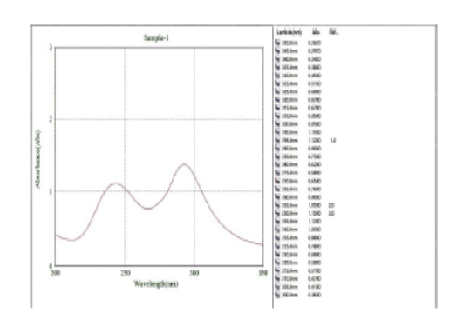
The damaging effects of ultraviolet (UV) radiation on the skin include skin burns, photoaging, hyperpigmentation, and skin cancer. Sunscreens are extensively utilized for UV protection. Herbal sunscreens have recently been considered because of their safety, antioxidant potential, and fewer side effects. The flowers of Rhododendron barbatum contain flavonoids, phenolics, tannins, and saponins that impart photoprotective properties to the flowers. Hydroalcoholic extraction was carried out using a maceration process, where ethanol and water were used in 70:30 ratio. The phytochemical analysis was undertaken on R. barbatum flowers. Three different formulations were used (F1, F2, and F3) containing 1ml, 2ml and 3ml hydroalcoholic extract. These were screened against various parameters, including colour, pH, spreadability, washability, stability, and patch tests, and SPF determination using the Mansur equation. The phytochemical analysis indicated the presence of flavonoids, phenols, tannins, and saponins. All experiments were done in triplicates (n = 3), and all results were calculated as mean ± SD. All formulations displayed desirable physicochemical characteristics. Among all formulations, F3 displayed the best characteristics in terms of homogeneity, spreadability, and stability. The pH of F3 was found to be 5.60 ± 0.17 and its spreadability was 5.50 ± 0.00 cm (mean ± SD, n = 3), which is favorable for topical application. The SPF value of formulation F3 was 8.36. The SPF activity is due to the presence of flavonoids and phenols that exhibit good antioxidant properties and UV absorptive properties. This helps prevent oxidative stress and UV-induced damage. The enhanced activity exhibited by formulation F3 can be attributed to the higher concentration of extracts present in this formulation. The herbal sunscreen cream was chemically and physically stable, safe, and showed moderate photoprotective efficacy. Therefore, it can be considered an alternative to artificial sunscreen creams. The developed formulation may serve as a promising natural sunscreen. However, further in vivo and clinical evaluation are required.
Keywords: Herbal sunscreen, <I>Rhododendron barbatum</I>, Ultraviolet radiation, SPF, Flavonoids, Photoprotection
1. D’Orazio J, Jarrett S, Amaro-Ortiz A, Scott T. UV Radiation and the Skin. International Journal of Molecular Sciences. 2013; 14 (6). Available from: https://doi.org/10.3390/ijms140612222
2. Young AR, Claveau J, Rossi AB. Ultraviolet radiation and the skin: Photobiology and sunscreen photoprotection. Journal of the American Academy of Dermatology. 2017; 76 (3). Available from: https://doi.org/10.1016/j.jaad.2016.09.038
3. Ahmady A, Amini MH, Zhakfar AM, Babak G, Sediqi MN. Sun Protective Potential and Physical Stability of Herbal Sunscreen Developed from Afghan Medicinal Plants. Turkish Journal of Pharmaceutical Sciences. 2020; 17 (3). Available from: https://doi.org/10.4274/tjps.galenos.2019.15428
4. Rawat U, Joshi V, Semwal DK, Bamola A, Semwal S, Badoni R, et al. Triterpenoidal saponin and phenolic glycosides from Rhododendron barbatum flowers. Medicinal Plants - International Journal of Phytomedicines and Related Industries. 2011; 3 (1). Available from: https://doi.org/10.5958/j.0975-4261.3.1.010
5. Chaurasia B, Pandey A, Palni LMS. Distribution, colonization and diversity of arbuscular mycorrhizal fungi associated with central Himalayan rhododendrons. Forest Ecology and Management. 2005; 207 (3). Available from: https://doi.org/10.1016/j.foreco.2004.10.014
6. Torres-Contreras AM, Garcia-Baeza A, Vidal-Limon HR, Balderas-Renteria I, Ramírez-Cabrera MA, Ramirez-Estrada K. Plant Secondary Metabolites against Skin Photodamage: Mexican Plants, a Potential Source of UV-Radiation Protectant Molecules. Plants. 2022; 11 (2). Available from: https://doi.org/10.3390/plants11020220
7. Mewada R, Shah Y. Preparation and evaluation of herbal sunscreen creams. International Journal of Pharmaceutical Chemistry and Analysis. 2023; 10 (2). Available from: https://doi.org/10.18231/j.ijpca.2023.021
8. Rohmani S, Mar’atushsholihah L, Darojati UA, Meitasari AD, Susanto BNA. Formulation and Activity of Sunscreen Cream from Ethanol Extract of Calendula officinalis L Flowers. Jurnal Sains Farmasi & Klinis. 2024; 11 (1). Available from: https://doi.org/10.25077/jsfk.11.1.48-57.2024
9. Donglikar MM, Deore SL. Development and Evaluation of Herbal Sunscreen. Pharmacognosy Journal. 2016; 9 (1). Available from: https://doi.org/10.5530/pj.2017.1.15
10. Vaja PN, Popaniya HS, Tank CJ, Tank PV, Parmar KH, Borkhataria CH. A basic Review on herbal plants for Sunscreen preparation. Research Journal of Topical and Cosmetic Sciences. 2024; Available from: https://doi.org/10.52711/2321-5844.2024.00020
11. Patel RI, Patel AM, Modi BD. Formulation and evaluation of herbal sunscreen. World Journal of Biology Pharmacy and Health Sciences. 2023; 13 (2). Available from: https://doi.org/10.30574/wjbphs.2023.13.2.0061
12. Chaiyana W, Liang G, Inthorn J, Chomchalao P. Cricket Oil-Based Sunscreen Systems: Formulation Design, Ultraviolet Protection Performance, and Preclinical Safety Evaluation. Pharmaceutics. 2026; 18 (3). Available from: https://doi.org/10.3390/pharmaceutics18030325
13. Špaglová M, Čermáková P, Jackuliaková P, Piešťanský J. Role of Emulsifiers and SPF Booster in Sunscreen Performance: Assessing SPF, Rheological Behavior, Texture, and Stability. Cosmetics. 2025; 12 (3). Available from: https://doi.org/10.3390/cosmetics12030118
14. Yarovaya L, Waranuch N, Wisuitiprot W, Khunkitti W. Chemical and mechanical accelerated and long‐term stability evaluation of sunscreen formulation containing grape seed extract. Journal of Cosmetic Dermatology. 2022; 21 (11). Available from: https://doi.org/10.1111/jocd.15308
15. Nabiyeva G, Teoman B, Potanin A, Gor GY. Sunscreen Sensory Attribute Prediction via Textural, Rheological, and Tribological Tests. International Journal of Cosmetic Science. 2026; 48 (1). Available from: https://doi.org/10.26434/chemrxiv-2025-68x4f
16. Yulianti E, Warsito W, Sabarudin A, Muchtarohmah B, Wahyuningtyas TA, Velya OV. Development of High-SPF Sunscreen Cream Formulation Using Green Tea (Camellia sinensis L.) Extract Obtained via Combined Pulsed Electric Field and Microwave–Ultrasound Assisted Extraction (PEF-MUAE). journal of pure and applied chemistry research. 2025; 14 (2). Available from: https://doi.org/10.21776/ub.jpacr.2025.014.02.7949
17. Khan MA. Sun protection factor determination studies of some sunscreen formulations used in cosmetics for their selection. Journal of Drug Delivery and Therapeutics. 2018; 8 (5-s). Available from: https://doi.org/10.22270/jddt.v8i5-s.1924
18. Rajasekar M, Mary J, Sivakumar M, Selvam M. Recent developments in sunscreens based on chromophore compounds and nanoparticles. RSC Advances. 2024; 14 (4). Available from: https://doi.org/10.1039/d3ra08178h
© 2026 Published by Krupanidhi College of Pharmacy. This is an open-access article under the CC BY-NC-ND license (https://creativecommons.org/licenses/by-nc-nd/4.0/)
Subscribe now for latest articles and news.