Journal of Pharmaceutical Research
Year: 2026, Volume: 25, Issue: 2, Pages: 98-105
Review Article
Umesh Jain1, Sakshi Bachhav1, Harsha Marathe1, Divya Thakare1, Mamta Patil1, Aman Upaganlawar2*, Manojkumar Mahajan3, Chandrashekhar Upasani4
1Research Scholar, Department of Pharmacology, SNJB's Shriman Sureshdada Jain College of Pharmacy, Neminagar, Chandwad, Nashik, India
2Professor and Head, Department of Pharmacology, SNJB's Shriman Sureshdada Jain College of Pharmacy, Neminagar, Chandwad, Nashik, India
3Associate Professor, Department of Pharmacology, SNJB's Shriman Sureshdada Jain College of Pharmacy, Neminagar, Chandwad, Nashik, India
4Professor and Principal, Department of Pharmacology, SNJB's Shriman Sureshdada Jain College of Pharmacy, Neminagar, Chandwad, Nashik, India
*Corresponding Author
Email: [email protected]
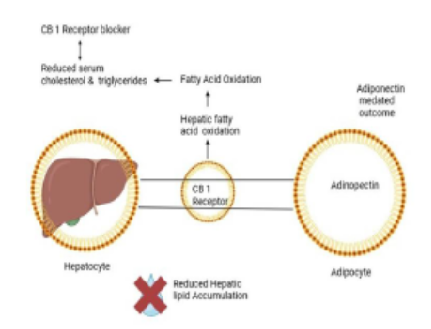
Metabolic disorders, such as obesity, type 2 diabetes mellitus, dyslipidemia and hypertension, are one of the fastest-growing health issues across the world due to insulin resistance, low-grade chronic inflammation, and disrupted energy homeostasis. The endocannabinoid system (ECS) is a crucial factor in the regulation of appetite, glucose and lipid metabolism, inflammatory signalling, and energy balance, as the cannabinoid type 1. CB1 receptor has become a major molecular mediator in the pathogenesis of metabolic diseases. Initial clinical trials showed that pharmacological inhibition of the CB1 receptor could promote body weight, glycemic and lipid profile and cardiometabolic risk factors; first-generation centrally acting CB1 antagonists, like rimonabant, were discontinued because of unacceptable neuropsychiatric adverse effects. This constraint led to a paradigm shift in the creation of the peripherally restricted CB1 receptor antagonist that maintains metabolism efficacy and limits exposure to the central nervous system (CNS). The role of the peripheral CB1 receptor in obesity, insulin resistance, dyslipidemia, and hypertension is critically discussed in this review, and the mechanisms by which CB1 blockade improves insulin sensitivity, reduces lipid accumulation, attenuates inflammation, and maintains glucose homeostasis are elucidated. The emerging technology in medicinal chemistry has resulted in the discovery of novel peripherally selective CB1 antagonists, such as RTI1092769, INV-202, BAR-1, otenabant and thioamide-based antagonists, which exhibit encouraging preclinical efficacies with reduced safety profiles. Moreover, contemporary obstacles in clinical translation, regulatory mechanisms, and prospects of using combination therapy, precision medicine, and targeting with tissue are also described. Taken together, the peripherally selective CB1 receptor blockade is a mechanistically well-founded and highly promising therapeutic approach in the treatment of metabolic disorders.
Keywords: Cannabinoid type-1 receptor, Endocannabinoid system, Metabolic disorder, Type 2 diabetes mellitus, Obesity
1. Gamage TF, Lichtman AH. The Endocannabinoid System: Role in Energy Regulation. Pediatric Blood & Cancer. 2012; 58 (1). Available from: https://doi.org/10.1002/pbc.23367
2. Schulz P, Hryhorowicz S, Rychter AM, Zawada A, Słomski R, Dobrowolska A, <I>et al</I>. What Role Does the Endocannabinoid System Play in the Pathogenesis of Obesity?. Nutrients. 2021; 13 (2). Available from: https://doi.org/10.3390/nu13020373
3. Murphy T, Le Foll B. Targeting the Endocannabinoid CB1 Receptor to Treat Body Weight Disorders: A Preclinical and Clinical Review of the Therapeutic Potential of Past and Present CB1 Drugs. Biomolecules. 2020; 10 (6). Available from: https://doi.org/10.3390/biom10060855
4. Khan N, Laudermilk L, Ware J, Rosa T, Mathews K, Gay E, <I>et al</I>. Peripherally Selective CB1 Receptor Antagonist Improves Symptoms of Metabolic Syndrome in Mice. ACS Pharmacology & Translational Science. 2021; 4 (2). Available from: https://doi.org/10.1021/acsptsci.0c00213
5. Chen W, Shui F, Liu C, Zhou X, Li W, Zheng Z, <I>et al</I>. Novel Peripherally Restricted Cannabinoid 1 Receptor Selective Antagonist TXX-522 with Prominent Weight-Loss Efficacy in Diet Induced Obese Mice. Frontiers in Pharmacology. 2017; 8 Available from: https://doi.org/10.3389/fphar.2017.00707
6. Scheen AJ. Cannabinoid-1 receptor antagonists in type-2 diabetes. Best Practice & Research Clinical Endocrinology & Metabolism. 2007; 21 (4). Available from: https://doi.org/10.1016/j.beem.2007.08.005
7. Gruden G, Barutta F, Kunos G, Pacher P. Role of the endocannabinoid system in diabetes and diabetic complications. British Journal of Pharmacology. 2016; 173 (7). Available from: https://doi.org/10.1111/bph.13226
8. Sun J, Qu C, Wang Y, Huang H, Zhang M, Li H, <I>et al</I>. PTP1B, A Potential Target of Type 2 Diabetes Mellitus. Molecular Biology. 2016; 05 (04). Available from: https://doi.org/10.4172/2168-9547.1000174
9. Nagappan A, Shin J, Jung MH. Role of Cannabinoid Receptor Type 1 in Insulin Resistance and Its Biological Implications. International Journal of Molecular Sciences. 2019; 20 (9). Available from: https://doi.org/10.3390/ijms20092109
10. Aganović I, Dušek T. Pathophysiology of Metabolic Syndrome. <I>EJIFCC</I>. 2007; 18 (1). Available from: https://pmc.ncbi.nlm.nih.gov/articles/PMC5875075/
11. Islam MS, Wei P, Suzauddula M, Nime I, Feroz F, Acharjee M, <I>et al</I>. The interplay of factors in metabolic syndrome: understanding its roots and complexity. Molecular Medicine. 2024; 30 (1). Available from: https://doi.org/10.1186/s10020-024-01019-y
12. Patil AS, Mahajan UB, Agrawal YO, Patil KR, Patil CR, Ojha S, <I>et al</I>. Plant-derived natural therapeutics targeting cannabinoid receptors in metabolic syndrome and its complications: A review. Biomedicine & Pharmacotherapy. 2020; 132 Available from: https://doi.org/10.1016/j.biopha.2020.110889
13. Miralpeix C, Reguera AC, Fosch A, Zagmutt S, Casals N, Cota D, <I>et al</I>. Hypothalamic endocannabinoids in obesity: an old story with new challenges. Cellular and Molecular Life Sciences. 2021; 78 (23). Available from: https://doi.org/10.1007/s00018-021-04002-6
14. Richey JM, Woolcott O. Re-visiting the Endocannabinoid System and Its Therapeutic Potential in Obesity and Associated Diseases. Current Diabetes Reports. 2017; 17 (10). Available from: https://doi.org/10.1007/s11892-017-0924-x
15. Fulp A, Bortoff K, Seltzman H, Zhang Y, Mathews J, Snyder R, <I>et al</I>. Design and Synthesis of Cannabinoid Receptor 1 Antagonists for Peripheral Selectivity. Journal of Medicinal Chemistry. 2012; 55 (6). Available from: https://doi.org/10.1021/jm201731z
16. Carai MAM, Colombo G, Maccioni P, Gessa GL. Efficacy of Rimonabant and Other Cannabinoid CB<sub>1</sub> Receptor Antagonists in Reducing Food Intake and Body Weight: Preclinical and Clinical Data. CNS Drug Reviews. 2006; 12 (2). Available from: https://doi.org/10.1111/j.1527-3458.2006.00091.x
17. Nguyen T, Thomas BF, Zhang Y. Overcoming the Psychiatric Side Effects of the Cannabinoid CB1 Receptor Antagonists: Current Approaches for Therapeutics Development. Current Topics in Medicinal Chemistry. 2019; 19 (16). Available from: https://doi.org/10.2174/1568026619666190708164841
18. Moreira FA, Crippa JAS. The psychiatric side-effects of rimonabant. Revista Brasileira de Psiquiatria. 2009; 31 (2). Available from: https://doi.org/10.1590/s1516-44462009000200012
19. González-Mariscal I, Krzysik-Walker SM, Doyle ME, Liu KR, Cimbro R, Calvo SS, <I>et al</I>. Human CB1 Receptor Isoforms, present in Hepatocytes and β-cells, are Involved in Regulating Metabolism. Scientific Reports. 2016; 6 (1). Available from: https://doi.org/10.1038/srep33302
20. Bellocchio L, Soria-Gómez E, Quarta C, Metna-Laurent M, Cardinal P, Binder E, <I>et al</I>. Activation of the sympathetic nervous system mediates hypophagic and anxiety-like effects of CB <sub>1</sub> receptor blockade. Proceedings of the National Academy of Sciences. 2013; 110 (12). Available from: https://doi.org/10.1073/pnas.1218573110
21. Tedesco L, Valerio A, Cervino C, Cardile A, Pagano C, Vettor R, <I>et al</I>. Cannabinoid Type 1 Receptor Blockade Promotes Mitochondrial Biogenesis Through Endothelial Nitric Oxide Synthase Expression in White Adipocytes. Diabetes. 2008; 57 (8). Available from: https://doi.org/10.2337/db07-1623
22. Tam J, Godlewski G, Earley BJ, Zhou L, Jourdan T, Szanda G, <I>et al</I>. Role of adiponectin in the metabolic effects of cannabinoid type 1 receptor blockade in mice with diet-induced obesity. American Journal of Physiology-Endocrinology and Metabolism. 2014; 306 (4). Available from: https://doi.org/10.1152/ajpendo.00489.2013
23. Lipina C, Vaanholt LM, Davidova A, Mitchell SE, Storey-Gordon E, Hambly C, <I>et al</I>. <scp>CB</scp>1 receptor blockade counters age‐induced insulin resistance and metabolic dysfunction. Aging Cell. 2016; 15 (2). Available from: https://doi.org/10.1111/acel.12438
24. Rohbeck E, Eckel J, Romacho T. Cannabinoid Receptors in Metabolic Regulation and Diabetes. Physiology. 2021; 36 (2). Available from: https://doi.org/10.1152/physiol.00029.2020
25. Kunos G, Tam J. The case for peripheral CB<sub>1</sub>receptor blockade in the treatment of visceral obesity and its cardiometabolic complications. British Journal of Pharmacology. 2011; 163 (7). Available from: https://doi.org/10.1111/j.1476-5381.2011.01352.x
26. Quarta C, Cota D. Anti-obesity therapy with peripheral CB1 blockers: from promise to safe(?) practice. International Journal of Obesity. 2020; 44 (11). Available from: https://doi.org/10.1038/s41366-020-0577-8
27. Han JH, Shin H, Park JY, Rho JG, Son DH, Kim KW, <I>et al</I>. A novel peripheral cannabinoid 1 receptor antagonist, AJ5012, improves metabolic outcomes and suppresses adipose tissue inflammation in obese mice. The FASEB Journal. 2019; 33 (3). Available from: https://doi.org/10.1096/fj.201801152rr
28. Han JH, Kim W. Peripheral CB1R as a modulator of metabolic inflammation. The FASEB Journal. 2021; 35 (4). Available from: https://doi.org/10.1096/fj.202001960r
29. Hirsch S, Tam J. Cannabis: From a Plant That Modulates Feeding Behaviors toward Developing Selective Inhibitors of the Peripheral Endocannabinoid System for the Treatment of Obesity and Metabolic Syndrome. Toxins. 2019; 11 (5). Available from: https://doi.org/10.3390/toxins11050275
30. Pertwee RG. Pharmacology of Cannabinoid Receptor Ligands. Current Medicinal Chemistry. 1999; 6 (8). Available from: https://doi.org/10.2174/0929867306666220401124036
31. Davis MP. Cannabinoids in pain management: CB1, CB2 and non-classic receptor ligands. Expert Opinion on Investigational Drugs. 2014; 23 (8). Available from: https://doi.org/10.1517/13543784.2014.918603
32. Lee SH, Seo HJ, Lee SH, Jung ME, Park JH, Park HJ, <I>et al</I>. Biarylpyrazolyl Oxadiazole as Potent, Selective, Orally Bioavailable Cannabinoid-1 Receptor Antagonists for the Treatment of Obesity. Journal of Medicinal Chemistry. 2008; 51 (22). Available from: https://doi.org/10.1021/jm800843r
33. Rowland M, Peck C, Tucker G. Physiologically-Based Pharmacokinetics in Drug Development and Regulatory Science. Annual Review of Pharmacology and Toxicology. 2011; 51 (1). Available from: https://doi.org/10.1146/annurev-pharmtox-010510-100540
34. Shenoy P. Multi-regional clinical trials and global drug development. Perspectives in Clinical Research. 2016; 7 (2). Available from: https://doi.org/10.4103/2229-3485.179430
35. Singh AV, Bhardwaj P, Upadhyay AK, Pagani A, Upadhyay J, Bhadra J, <I>et al</I>. Navigating regulatory challenges in molecularly tailored nanomedicine. Exploration of BioMat-X. 2024; 1 (2). Available from: https://doi.org/10.37349/ebmx.2024.00009
36. Halamoda‐Kenzaoui B, Holzwarth U, Roebben G, Bogni A, Bremer‐Hoffmann S. Mapping of the available standards against the regulatory needs for nanomedicines. WIREs Nanomedicine and Nanobiotechnology. 2019; 11 (1). Available from: https://doi.org/10.1002/wnan.1531
37. Jackson N, Atar D, Borentain M, Breithardt G, van Eickels M, Endres M, <I>et al</I>. Improving clinical trials for cardiovascular diseases: a position paper from the Cardiovascular Round Table of the European Society of Cardiology. European Heart Journal. 2016; 37 (9). Available from: https://doi.org/10.1093/eurheartj/ehv213
38. Alemayehu D, Hemmings R, Natarajan K, Roychoudhury S. Perspectives on Virtual (Remote) Clinical Trials as the “New Normal” to Accelerate Drug Development. Clinical Pharmacology & Therapeutics. 2022; 111 (2). Available from: https://doi.org/10.1002/cpt.2248
© 2026 Published by Krupanidhi College of Pharmacy. This is an open-access article under the CC BY-NC-ND license (https://creativecommons.org/licenses/by-nc-nd/4.0/)
Subscribe now for latest articles and news.