Journal of Pharmaceutical Research
DOI: 10.18579/jopcr/v25.i3.154
Year: 2026, Volume: 25, Issue: 3, Pages: 197-201
Original Article
Hetvi Hitendrasinh Bhadigar1*, T U Ebin2
1Postgraduate Scholar, Department of Rasashastra evum Bhaishajya Kalpana, Parul Institute of Ayurved, Parul University, Vadodara, Gujarat, India
2Assistant Professor, Department of Rasashastra evum Bhaishajya Kalpana, Parul Institute of Ayurved, Parul University, Vadodara, Gujarat, India
*Corresponding Author
Email: Hetvi Hitendrasinh Bhadigar
[email protected]

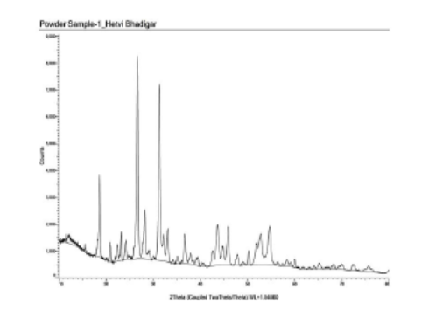
Talagarbha Pottali is a classical Pottali Kalpana described in Rasashastra, prepared using purified Haratala, Rasa Sindura, and Gandhaka through the Gandhaka Drava Paka process. The formulation is traditionally used in Vata-Kapha predominant disorders, particularly respiratory conditions. To prepare Talagarbha Pottali according to classical principles and evaluate its structural characteristics using X-ray diffraction (XRD). The formulation was prepared with purified Haratala, Rasa Sindura, Gandhaka, and Kumari Swarasa. The Pottali was processed in molten Gandhaka under controlled heating, and pharmaceutical observations during the procedure were systematically recorded. Organoleptic evaluation and XRD analysis were performed on the finished product. Controlled heating produced a hard, compact, reddish-brown Pottali with a uniform surface. Characteristic observations such as bubble formation, honey-like sulphur consistency, and resonant sound indicated proper completion of the process. XRD analysis revealed a crystalline multiphase sulphide structure containing arsenic- and mercury-based sulphide compounds, suggesting transformation of the ingredients into stable mineral phases during processing. The study demonstrates that the classical Gandhaka Drava Paka technique yields a structurally stable Talagarbha Pottali. The observed physicochemical changes support the traditional concept that Pottali Kalpana enhances the stability and therapeutic potential of herbo-mineral formulations.
Keywords: <I>Talagarbha Pottali, Pottali Kalpana, Rasashastra, Gandhaka Paka</I>, Pharmaceutical study, <I>Shodhana</I>, Ayurvedic herbo-mineral formulation
1. Sharma PH. Rasayogasagar.
2. Sumedhan V, Ratheesh P, Meghna PP. A Review on Pottali Kalpana. Journal of Ayurveda and Integrated Medical Sciences (JAIMS). 2018; 3 (4). Available from: https://doi.org/10.21760/jaims.v3i4.13290
3. Ebin TU. Tamragarbha Pottali - A Compact Drug Formulation in Ayurveda Rasasastra. International Journal of Science and Research (IJSR). 2021; 10 (6). Available from: https://doi.org/10.21275/sr21529000751
4. Chaudhari SY, Vyas SV, Nariya MN, Prajapati PK. Acute and Chronic Toxicity of Rasamanikya, an Ayurvedic Arsenical Formulation in Rats. Indian Journal of Pharmaceutical Sciences. 2018; 80 (2). Available from: https://doi.org/10.4172/pharmaceutical-sciences.1000361
5. Patil G, Hiremath SG, Patil S, Singh R, Siddhanta S. Synthesis and nanoparticle characterization of an Ayurveda formulation Tridhathu Garbha Pottali. Journal of Drug Research in Ayurvedic Sciences. 2024; 9 (3). Available from: https://doi.org/10.4103/jdras.jdras_399_23
6. Anitha H, Pandya MR, Toshikhane H. Research on pharmaceutical study of Tamragarbha Pottali. International Journal of Biology, Pharmacy and Allied Sciences. 2022; 11 (3). Available from: https://doi.org/10.31032/ijbpas/2022/11.3.1096
7. Vagbhata. Rasaratna Samuccaya. Chapter 3.
8. Sadananda Sharma. Rasatarangini. Chapter 11.
9. Hariprapanna Sharma. Rasayogasagar. Part 2, Preparation No. 110.
© 2026 Published by Krupanidhi College of Pharmacy. This is an open-access article under the CC BY-NC-ND license (https://creativecommons.org/licenses/by-nc-nd/4.0/)
Subscribe now for latest articles and news.